 how-to
7 Tree Trimming Moves That Protect Your Property Value
Quick Summary
Tree trimming protects property value when it removes dead, cracked, or leaning branches and keeps the canopy balanced and healthy. Trimming that improves health and curb appeal supports value, while heavy topping or removing healthy shade trees without replacement can hurt it.
- Remove dead, diseased, or broken branches first, then crossing or rubbing branches.
- Never top a tree to reduce its height; topping causes weak regrowth and unsealed wounds.
- Remove no more than about 25 percent of the live canopy in a single season.
- Make cuts just outside the branch collar, not flush with the trunk or as long stubs.
- Ask for a line-item written estimate and a certificate of insurance before hiring.
Table of Contents
- How Trees Affect Property Value in Nashville Yards
- Does Cutting Down Trees Decrease Property Value?
- How Trimming Improves Curb Appeal and Tree Health
- Tree Pruning Best Practices for Homeowners
- Tree Trimming for Property Value Cost: What Affects the Price
- Using a Tree Value Calculator and Appraisal Context
- Scheduling Your Next Trim or Assessment With Red Woodpecker
- Frequently Asked Questions
How Trees Affect Property Value in Nashville Yards
Last Updated: November 5, 2026
Healthy trees can add real appeal to a home, and that appeal often shows up when a buyer walks the curb. Tree trimming for property value is less about making a yard look tidy for a week and more about keeping mature trees safe, balanced, and attractive over the long run. In Nashville, where storms and summer heat test trees hard, the way a yard is maintained can influence how buyers and appraisers see a property.
Red Woodpecker Tree Service works with homeowners who want their trees to add value rather than create problems. Because the right move depends on species, health, and location, each tree should be assessed before any cut is recommended.
Trees affect property value in a few clear ways:
- Curb appeal: Shade trees and well-shaped ornamentals make a home look established.
- Energy and comfort: Trees near the house can reduce cooling costs in warm months.
- Privacy and views: Thoughtful placement can block a busy street without blocking the sky.
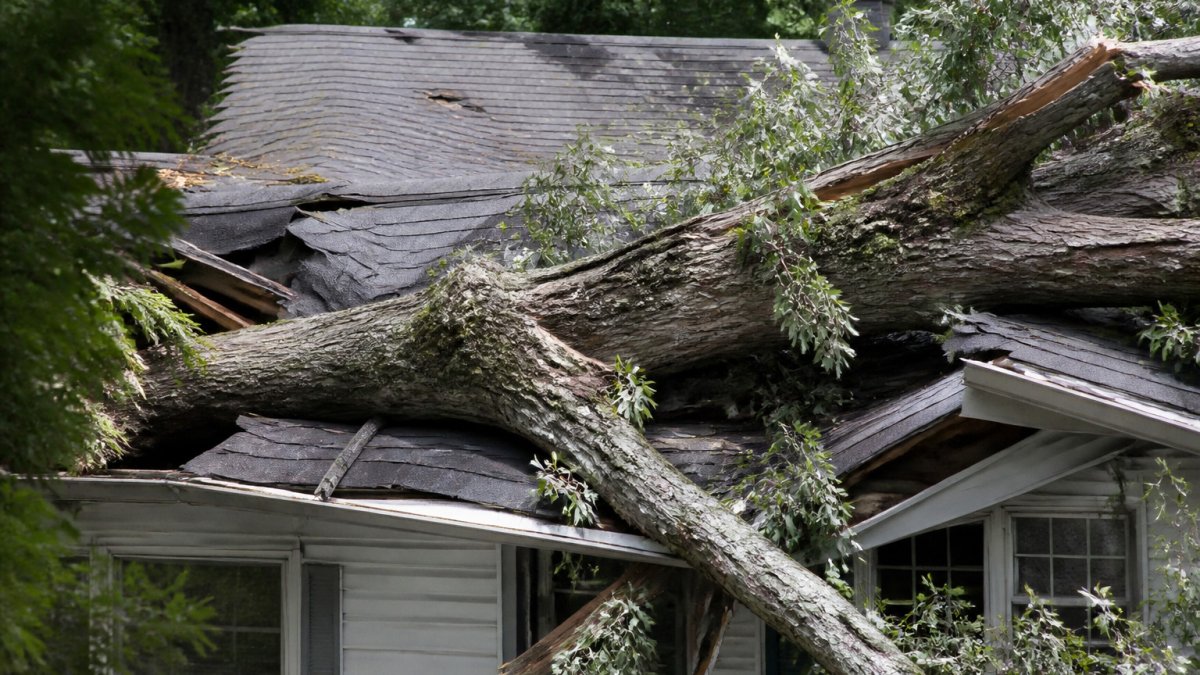
- Risk: Dead or leaning trees can lower buyer confidence fast.
Watch out: a tree that looks impressive from the street can still hide decay in its trunk or roots. Buyers and inspectors often notice that before they notice the leaves.
Does Cutting Down Trees Decrease Property Value?
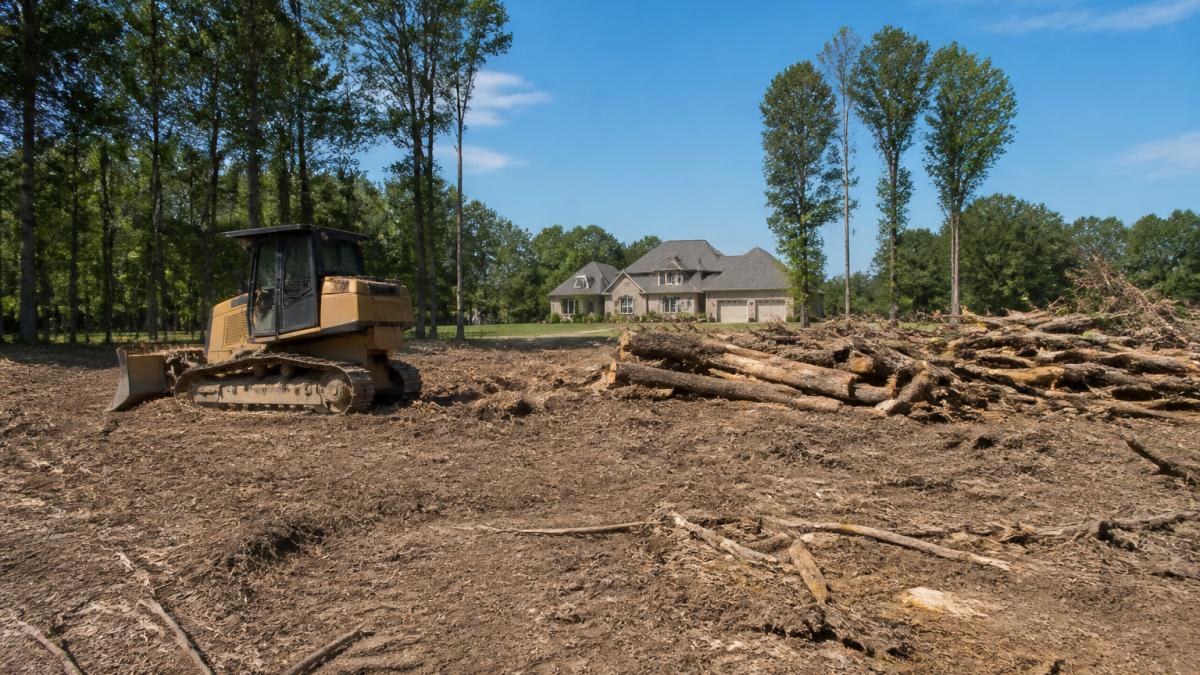
Removing a tree does not always hurt a property. Removing a hazardous or diseased tree usually helps, because it cuts liability and removes a visible risk. Removing a healthy, well-placed shade tree for no clear reason is more likely to reduce appeal.
The right question is not "Should I cut it?" but "What does this tree do for the property, and what risk does it carry?" A large, healthy oak in the middle of a lawn adds different value than a crooked tree leaning over a roof.
Common situations where removal may help value:
- The tree is dead, dying, or structurally unsound
- It leans toward a house, garage, or power line
- Roots are lifting a driveway or damaging a foundation
- Too many trees crowd a small lot and block light from the home
Situations where removal may hurt value:
- A mature shade tree is removed without replacement
- The yard is left bare, with stumps and no new planting
- The work is done poorly and leaves torn branches and open wounds
How Trimming Improves Curb Appeal and Tree Health
Trimming done right helps a tree stay healthy and look good. Removing dead, crossing, or rubbing branches lets light and air move through the canopy, which lowers the chance of disease taking hold. A balanced crown also handles wind better during Nashville storms.
Trimming for appearance alone can backfire. Heavy topping, where whole branches are cut back to stubs, weakens a tree and often causes fast, unsightly regrowth. Good pruning keeps the tree's natural shape while removing the parts that cause trouble.
Spotting Dead Branches and Hazard Signs
Look for these warning signs during a walk around the yard:
- Branches with no leaves while the rest of the tree is in leaf
- Cracks, splits, or cavities in the trunk or major limbs
- Mushrooms or fungal growth at the base of the trunk
- Bark that is peeling, sunken, or oozing
- Leaning trees with fresh soil heaving on one side
If you see any of these, get a professional assessment before you prune. Serious signs such as a split trunk or a leaning tree can call for removal rather than trimming, so see when to remove hazardous trees. To confirm whether a tree is declining, read this complete inspection guide. A dead limb over a driveway is a hazard, and a cut in the wrong place can speed decline. For a fuller method for judging overall tree health, see tree health assessment guide.
Tree Pruning Best Practices for Homeowners
Good pruning starts with a clear goal: remove what is dead or dangerous, then shape the tree for balance. Use sharp, clean tools, and never remove more than about a quarter of a tree's living canopy in one season.
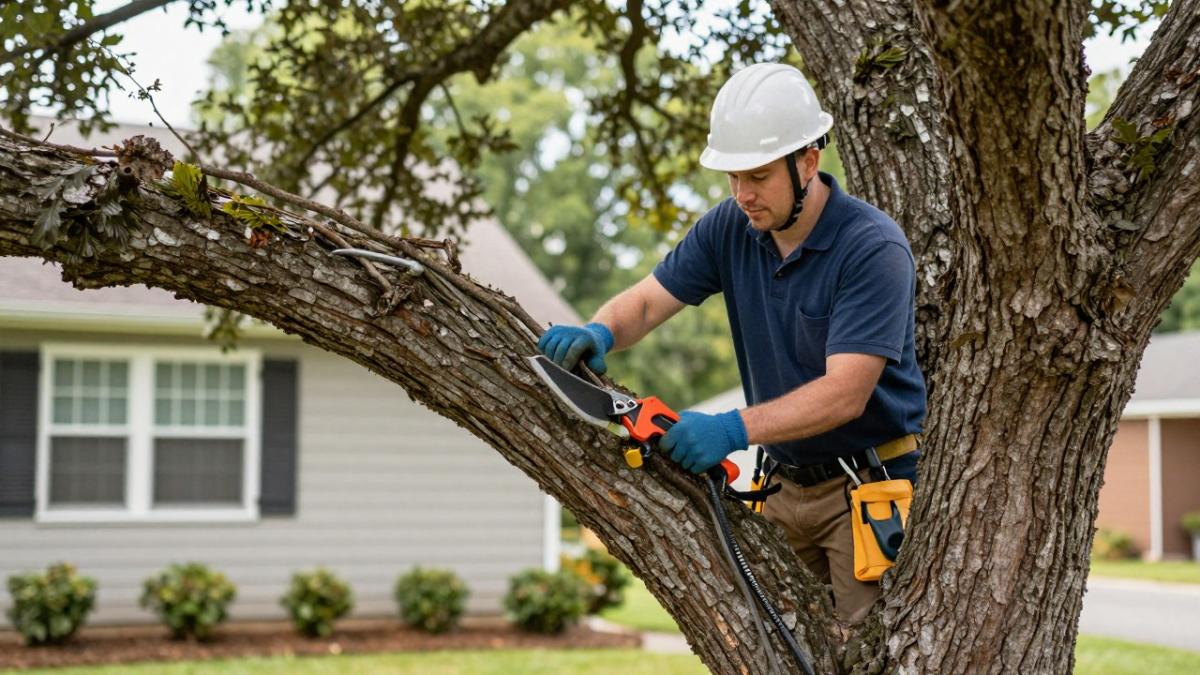
Before you pick up a saw, walk the property and rank every tree by risk and value. A simple three-tier sort works for most yards:
- Hazard first: dead, cracked, or leaning trees, and any limb hanging over a roof, driveway, sidewalk, or power line. These get attention before anything else.
- Health second: crossing or rubbing branches, water sprouts, and diseased wood that can spread. Removing these protects the tree's structure.
- Shape last: light thinning and clearance pruning to open a view or lift a canopy over a walkway. This is cosmetic work and can wait until the first two tiers are handled.
A simple homeowner routine looks like this:
- Remove dead, diseased, or broken branches first.
- Cut crossing or rubbing branches back to a strong side branch or the trunk collar.
- Thin the canopy lightly so wind can pass through.
- Step back and check the shape from the street before finishing.
Watch out: do not top a tree to reduce its height. Topping cuts back to stubs, triggers fast weak regrowth, and leaves wounds the tree cannot seal; if height is the problem, the realistic options are removal or a species-appropriate replacement, not a hard cutback.
Timing, Cut Placement, and Canopy Limits
Timing matters. Most trees are best pruned during the dormant season, from late fall to early spring, when pests and disease are less active.
Cut placement matters just as much. Make each cut just outside the branch collar, the slightly swollen ring where a branch meets the trunk. Do not leave long stubs, and do not cut flush with the trunk.
Keep canopy removal modest. Taking too much at once stresses a tree and can cause sunscald on the trunk. A common guideline is to remove no more than about 25 percent of the live canopy in a single season, and less on older or stressed trees.
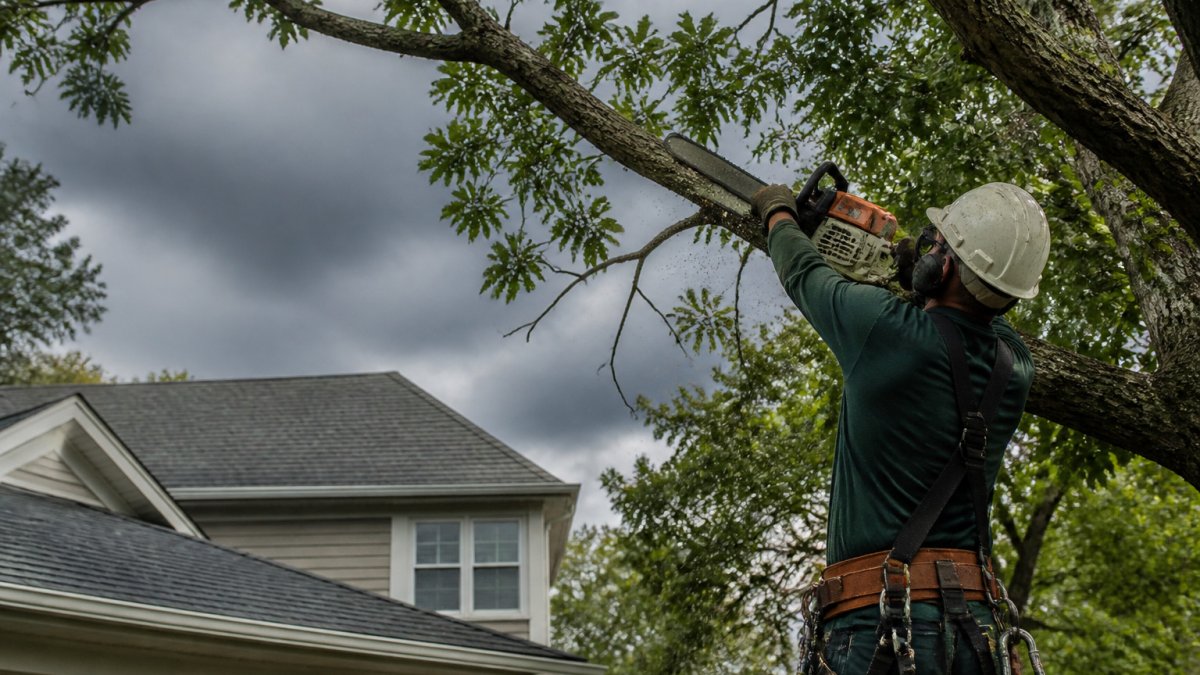
Dispose of cuttings promptly and keep them away from the trunk; piled debris can harbor pests and hold moisture against the bark. If a job requires climbing, a chainsaw above shoulder height, or work near a power line, stop and call a professional.
The article sets out the timing, cut placement and canopy limits that matter most when pruning, so the key rules are summarised below.
| Pruning factor | Guideline | Note |
|---|---|---|
| Dormant season | Late fall to early spring | Less pest and disease activity |
| Maples and birches | Ask an arborist for the window | Heavy sap bleeding if cut in late winter |
| Flowering trees | Prune right after bloom | Protects the current season's buds |
| Cut placement | Just outside the branch collar | Avoid long stubs and flush cuts |
| Canopy removal | About 25 percent per season | Less on older or stressed trees |
| Topping | Do not top to reduce height | Triggers weak regrowth and unsealed wounds |
Tree Trimming for Property Value Cost: What Affects the Price
Trimming costs vary with the size of the tree, its height, how close it sits to structures or power lines, the amount of cleanup, and how many trees are on the job. To weigh whether paying a professional beats doing the work yourself, see whether professional tree removal is worth it.
Most tree-care companies price a trimming job one of three ways, and knowing which one you are looking at makes bids easier to compare:
- Flat per-tree price: A single number for pruning one tree to a stated objective. Easiest to compare, but confirm what "prune" includes.
- Hourly crew rate: A rate per crew per hour, plus a disposal fee. Common for small jobs and storm cleanup; ask for an estimated hour range in writing.
- Line-item estimate: Separate prices for pruning, removal of specific limbs, stump grinding, hauling, and chipping. The most transparent format and the one to request when several trees are involved.
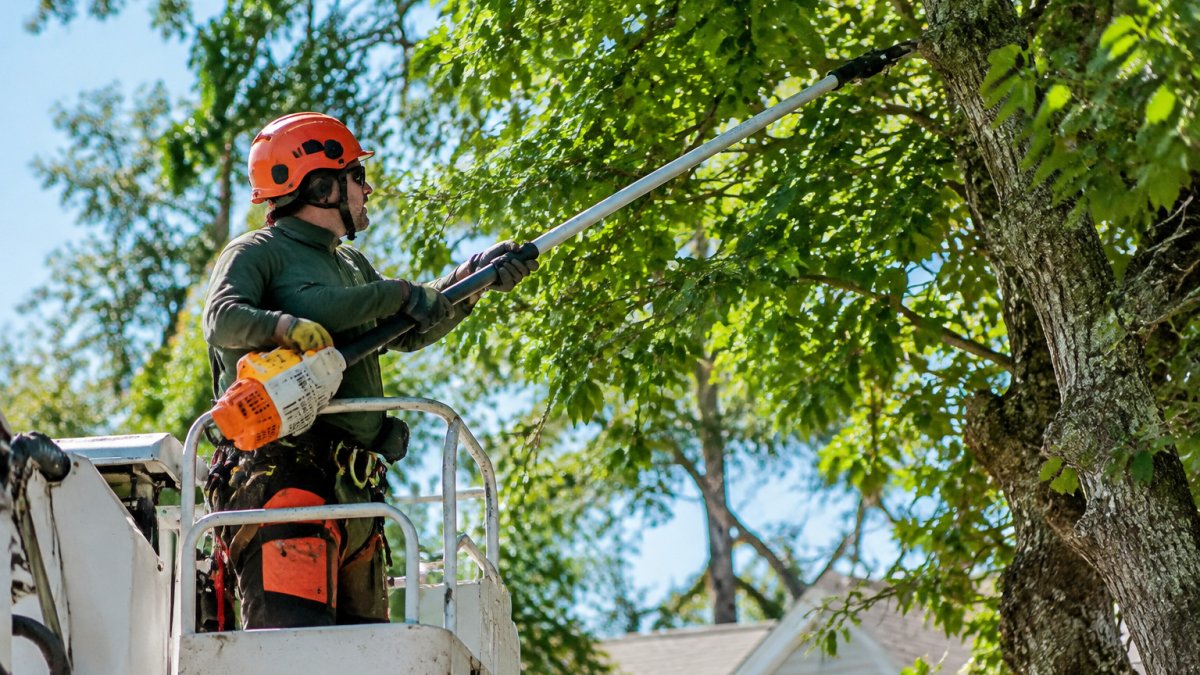
A written estimate should state the number of trees, the pruning objective for each (deadwood removal, clearance over a roof, canopy thinning), whether the crew will climb or use a bucket truck, whether a crane is needed, and who disposes of the debris.
Watch out: a very low bid can mean the crew skipped cleanup, did not carry proper insurance, or cut the tree badly. For a breakdown of what a tree company should carry, see the tree removal insurance requirements guide.
When you compare estimates, look at:
- Whether the quote lists exactly which branches or trees are included
- Whether cleanup, hauling, and chipping are part of the price
- Whether the company is licensed and insured, and whether the crew is supervised by a certified arborist
- Whether the price is firm or subject to change after the crew arrives
- Whether stump grinding is included or priced separately
- Whether the company offers a written workmanship guarantee
A practical way to weigh cost against value: compare the trimming quote to the cost of the problem it prevents. Removing a dead limb over a roof is usually far cheaper than repairing the roof, and a documented maintenance record can be shown to buyers and insurers.
Using a Tree Value Calculator and Appraisal Context
A tree value calculator can give you a rough idea of what a tree adds to a property, but it is not an appraisal. Most calculators estimate replacement value based on trunk size, species, and condition. They do not capture how a buyer in your neighborhood will react to a removed tree.
For a sale, ask a licensed real estate agent or appraiser how the local market views mature trees, and get a professional assessment of tree condition. An arborist can tell you whether a tree is worth keeping, trimming, or replacing, and that answer usually matters more than any online number.
Scheduling Your Next Trim or Assessment With Red Woodpecker
If you have dead branches, leaning trees, or a yard that needs a plan before a sale or storm season, Red Woodpecker Tree Service can help. Our certified arborists assess the tree, explain your options in plain terms, and provide a clear estimate. We also offer 24/7 emergency storm response for dangerous situations.
Request a visit today and get your free estimate from Red Woodpecker Tree Service.
Frequently Asked Questions
Does cutting down trees decrease property value?
It can, depending on the tree and the lot. Removing a healthy mature tree that provides shade, privacy, and curb appeal often lowers appraised value and buyer appeal. Removing a dead, diseased, or hazardous tree usually does not reduce value, and it can raise it by eliminating a safety risk and a potential liability. Trimming to correct structural problems and remove deadwood generally protects value. A certified arborist can assess whether a specific removal helps or hurts before you commit.
How much does tree trimming cost?
Pricing depends on tree size, height, access, the amount of work, debris removal, and local conditions, so there is no single fixed rate. Red Woodpecker Tree Service provides free estimates, and the best way to get current pricing for your property is to request a quote through the company website. When comparing estimates, check that each one includes the same scope of work, cleanup, and proof of licensing and insurance.
When should I hire an arborist to assess a tree?
Call a certified arborist if you see dead branches, cracks in the trunk, fungal growth at the base, leaning that has changed recently, or large limbs over your roof or a fence. Assessment is also wise before a home sale or after a storm. Red Woodpecker's trained and certified arborists can evaluate tree health and recommend trimming, removal, or monitoring, and the company offers 24/7 emergency storm response for dangerous situations.
How can I estimate the value of a tree on my property?
Appraisers commonly use replacement value methods, which estimate the cost of purchasing and installing a similar mature tree, adjusted for species, size, condition, and location. A tree value calculator can give a rough starting point, but it does not replace a professional appraisal. For a reliable figure, consult a certified arborist or a qualified appraiser familiar with urban tree valuation.