 how-to
How to Handle a Tree Falling on Your Roof
Last Updated: November 4, 2026
Quick Summary
If a tree falls on roof structures, first get everyone out and away from the damage, then call 911 for injuries, fire, or gas smells, or the utility company for downed lines. Do not cut or drag the tree yourself, and call a licensed tree professional once everyone is safe.
- Get people and pets out and keep clear of damaged areas and sagging ceilings
- Call 911 first for injuries, fire, or gas smell
- Call the utility company if a power line is down, touching the tree, or arcing
- Never cut or drag a loaded tree off the house yourself; loaded limbs can snap back
- Photograph the damage before any cleanup, and do not make permanent repairs before the insurance inspection
Table of Contents
- Start With Safety: Get Out and Stay Clear of Damaged Areas
- Emergency Decision Tree: Call 911, the Utility Company, or a Tree Professional
- What to Do If a Tree Falls on Your House During a Storm
- When the Tree Is Still Resting on the Roof
- Will Insurance Cover Tree Damage to Roof?
- Tree Fell on House, No Insurance: Your Options
- If a Neighbor's Tree Falls on Your Property, Who Is Responsible?
- Booking Your Tree Removal and Roof Repair With Red Woodpecker
- Frequently Asked Questions
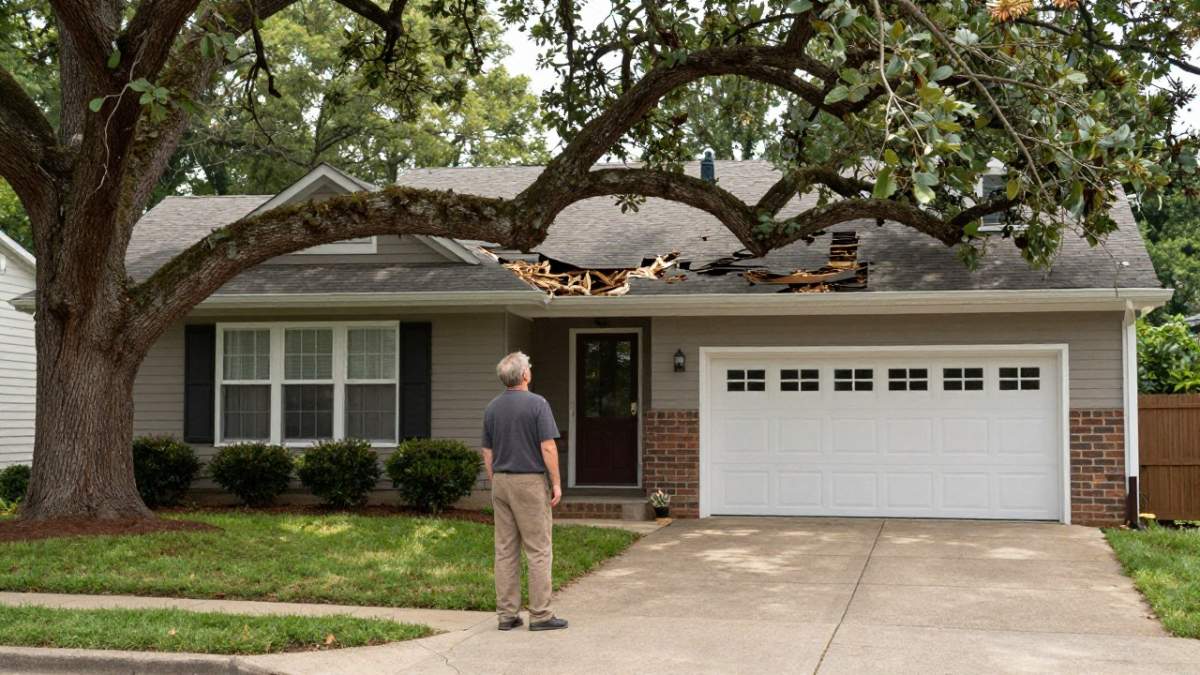
Walking outside to find a tree falls on roof situations is a frightening moment for any homeowner. The first hour after storm damage matters more than most people expect. This guide walks you through what to do, what to avoid, and when to call for help. Many homeowners find that a clear plan makes it easier to handle the stress when a tree falls on roof structures during a storm.
Start With Safety: Get Out and Stay Clear of Damaged Areas
Your first priority is getting people and pets out of harm's way. Do not go back inside to grab belongings if the roof or ceiling looks unstable.
Move everyone to a safe spot away from the house. Stay clear of the tree, any sagging ceiling, and broken glass. Water and debris can shift without warning, so keep your distance.
- Leave rooms directly under the damage
- Keep children and pets outside
- Avoid walking on wet or uneven surfaces near the house
- Do not touch exposed wires or any fallen power lines
Emergency Decision Tree: Call 911, the Utility Company, or a Tree Professional
Use this simple guide to decide who to call first.
- Call 911 right away if anyone is injured, if there is a fire, or if you smell gas
- Call your utility company if a power line is down, touching the tree, or arcing
- Call a tree professional once everyone is safe and no power or gas hazards remain
Many homeowners call the wrong number first and lose valuable time. Start with life safety, then move to utilities, then to tree removal.
Use this quick guide to decide who to call first when a tree lands on your home.
| Situation | Who to call | Why |
|---|---|---|
| Anyone injured, fire, or gas smell | 911 | Life safety comes first |
| Power line down, touching tree, or arcing | Utility company | Downed lines are a live hazard |
| Everyone safe, no power or gas hazards | Tree professional | Removal happens after hazards are cleared |
What to Do If a Tree Falls on Your House During a Storm
If the storm is still active, stay put in a safe interior room away from windows and wait for the weather to clear. Do not climb onto the roof to check on the damage.
Once conditions improve, take a quick look from the outside. Note where the tree hit, whether the roof has a large opening, and whether water is coming in.
Watch out: Do not try to cut or drag the tree off the house yourself. Loaded limbs can snap back and cause serious injury.
When the Tree Is Still Resting on the Roof
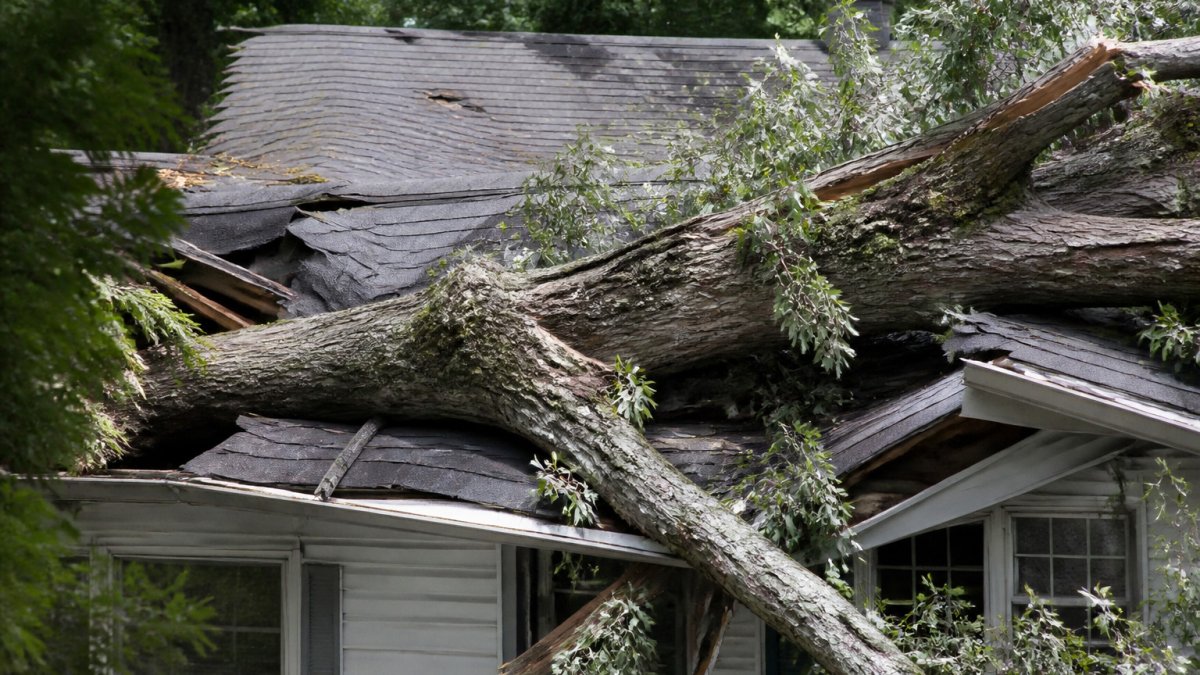
A tree that is still bearing on the roof is a different emergency from one that has already slid off. The trunk and limbs act as a lever and a dead load at the same time: the weight pushes down on rafters and sheathing, while any remaining root plate or attached limb can shift the load sideways when the wood is cut. That is why the most dangerous hour is often the one right after the storm, when a homeowner decides to "just trim a little" to relieve the pressure.
Treat the house as unsafe until a qualified professional says otherwise. Keep everyone out, including the garage and any room under the affected span. Ceiling drywall can crack and drop without much warning, and a sagging ridge line or a door that suddenly sticks are signs the framing is already moving.
Why you should not remove the weight yourself. Cutting a loaded limb changes the forces on the rest of the tree and on the roof. A limb under tension can kick back, a trunk can roll, and a section that looks stable can drop the moment it is severed. Homeowners with chainsaws are injured in exactly this scenario every storm season. Leave the cutting to a licensed arborist or tree service experienced in controlled removal.
How the removal is usually coordinated. A tree professional typically takes the load off first, working from safe elevated positions rather than from the roof itself. Only after the tree is clear does a roofing contractor or structural professional inspect the deck, rafters, and ridge for cracked or displaced framing. On larger jobs the two trades work the same day so the roof opening is not left exposed overnight.
What temporary measures can and cannot do. From the ground, a homeowner can move vehicles, furniture, and valuables out of the way and keep people and pets clear. Tarping or boarding an opening is a job for someone who can do it safely, often the roofing contractor, and even a well-anchored tarp is only a rain shield. It does not restore structural strength, and it can hide damage from the adjuster if it is installed before the inspection. Photograph the opening first.
Watch out: Do not re-enter the house to retrieve belongings while the tree is still on the roof, even if the interior looks dry. The load can redistribute after a partial cut or a shift in the wind, and the failure is often sudden rather than gradual.
Will Insurance Cover Tree Damage to Roof?
Many homeowners policies may cover a tree falling on the structure, depending on the policy terms. The details are where claims are won or lost, so read the policy language and call your agent before you authorize any work beyond emergency protection.
What is typically covered. The dwelling coverage pays to repair or replace the damaged roof, framing, siding, and attached structures, subject to your deductible. Most policies also include a separate allowance for removing the tree from the structure, often a set dollar limit, and a smaller limit for debris removal from the yard. Personal property inside the home is usually handled under contents coverage. If the home is uninhabitable, loss-of-use coverage may pay for temporary housing, but the trigger and daily limits vary by policy.
What is often not covered. A tree that was already dead, diseased, or visibly leaning and that the owner failed to address can complicate or defeat a claim. Damage from poor maintenance, gradual deterioration, or a tree that fell without any storm event may be excluded. Flood and earth movement are separate perils and are not part of a standard policy.
The documentation checklist that adjusters actually use. Build the file before anything is moved:
- Wide shots of the house from the street and from each corner, plus close-ups of the impact point, the tree, and the roof opening
- Interior photos of ceilings, walls, insulation, and any water staining, taken before cleanup
- A short video walk-through with narration of the date, time, and what you see
- The date and time of the storm and any local weather reports or warnings
- Receipts for tarps, board-up, hotel stays, meals, and any emergency repairs
- A running log of every call, email, and visit, with names, dates, and what was agreed
- The tree's condition before removal, trunk, roots, and canopy, since this is central to any dispute
Do not make permanent repairs before the inspection. Emergency work to protect the home from further damage is expected, but replacing shingles, drywall, or framing before the adjuster sees the loss can reduce or void the claim. Keep damaged materials available for inspection when it is safe to do so, and photograph them before disposal.
How the claim usually moves. After you report the loss, the insurer assigns an adjuster and may send a contractor to scope the damage. You will typically receive an initial payment for the undisputed portion, with a recoverable depreciation amount held back until repairs are complete and invoiced. Ask your adjuster what the tree-removal limit is, whether loss-of-use is triggered, and what documentation they need for the final payment. If the scope seems low, you can request a re-inspection and review the appraisal clause in your policy.
Watch out: Do not sign a repair contract or an assignment of benefits before the adjuster has inspected. Signing over your claim rights to a contractor is one of the most common ways homeowners lose control of the process.
Tree Fell on House, No Insurance: Your Options
Without insurance, the costs can feel overwhelming. Start by getting written estimates from at least two licensed tree and roofing contractors so you can compare the scope of work.
Ask about payment plans and whether the contractor offers financing. Check with your county or city government for current options.
Pricing depends on the size of the tree, the damage, and the work required. Contact Red Woodpecker Tree Service directly for a current quote.
If a Neighbor's Tree Falls on Your Property, Who Is Responsible?
Liability depends on the facts. In many cases, a tree owner is responsible if the tree was visibly dead, diseased, or leaning and the owner ignored the risk. If the tree fell in a normal storm and was healthy, the damage may fall under your own insurance.
Photograph the tree's condition before anything is removed. Then contact your insurer and, if needed, a local attorney who handles property damage. Your insurer can explain how claims between neighbors are typically handled.
Booking Your Tree Removal and Roof Repair With Red Woodpecker
Once the scene is safe and your insurer has documented the damage, it is time to bring in professionals. Red Woodpecker Tree Service offers 24/7 emergency storm response in White House and Nashville, with trained and certified arborists. We use modern tools and equipment to remove the tree safely and clean up the site.
Ask us about free estimates, and we will walk you through the next steps.
Frequently Asked Questions
Will insurance cover tree damage to roof?
In most U.S. homeowners policies, damage from a falling tree is covered under the dwelling coverage, provided the tree did not fall because of neglect or a pre-existing condition you knew about. Coverage typically applies to the roof, attic, and interior damage, but not to the tree itself unless it hit an insured structure. Policies and deductibles vary, so review your declarations page and file a claim promptly with photos and a contractor's written estimate.
What should I do if a tree fell on my house during a storm?
First, get everyone out of the home if there is structural damage, a gas smell, or water intrusion. Stay away from downed power lines and call 911 if lines are involved. Keep clear of the roof, do not try to remove the tree yourself, and call a licensed, insured tree removal service and your insurer. Document damage with photos and video before any cleanup or temporary tarping.
Who is responsible if a neighbor's tree falls on my property?
Generally, a tree owner is liable for damage caused by a tree that was dead, diseased, or obviously hazardous and that they knew or should have known about. If the tree was healthy and the storm was the cause, liability is often limited. Your insurer may pay for damage regardless, and you can pursue the neighbor's liability coverage if negligence can be shown. Keep records of the tree's condition and any prior warnings.
Can I stay in my house after a tree falls on the roof?
Only if a qualified inspector or contractor confirms the structure is safe and there are no gas, electrical, or significant water hazards. Many homes need temporary shelter while roof and ceiling repairs proceed. If you smell gas, see sagging ceilings, or notice wiring damage, leave immediately and call the appropriate emergency or utility number.
Dealing with a tree on your roof is stressful, but you do not have to handle it alone. Contact Red Woodpecker Tree Service today for fast, professional help and a free quote.