 how-to
How to Trim Trees for Storm Safety Before the Weather Hits
Last Updated: October 28, 2026
Quick Summary
A tree trimming storm plan removes the weak, dead, and overextended parts of a tree before high winds, ice, or heavy rain can break them off. Walk the property, inspect each tree from several angles, and prioritize dead, cracked, and hanging limbs first.
- Remove all dead limbs first, since they are the most likely to fall.
- Never top a tree before a storm, because topping creates weak regrowth that breaks more easily.
- Keep branches clear of roofs, fences, and power lines, and call the utility company for any line contact.
- Do not trim palms beyond removing dead or dying fronds, since over-pruning weakens the crown.
- Call a certified arborist for high limbs, power line proximity, structural defects, or a large share of canopy removal.
Table of Contents
- Step 1: Walk the Property and Inspect Each Tree for Risk
- Step 2: Prioritize Which Limbs Need Removal Using a Pruning Checklist
- Step 3: Set the Right Timing by Tree Species and Storm Type
- Step 4: Keep Branches Clear of Roofs, Fences, and Power Lines
- When to Stop DIY and Call a Certified Arborist
- Scheduling Your Storm Prep Trim and Getting a Quote
- Frequently Asked Questions
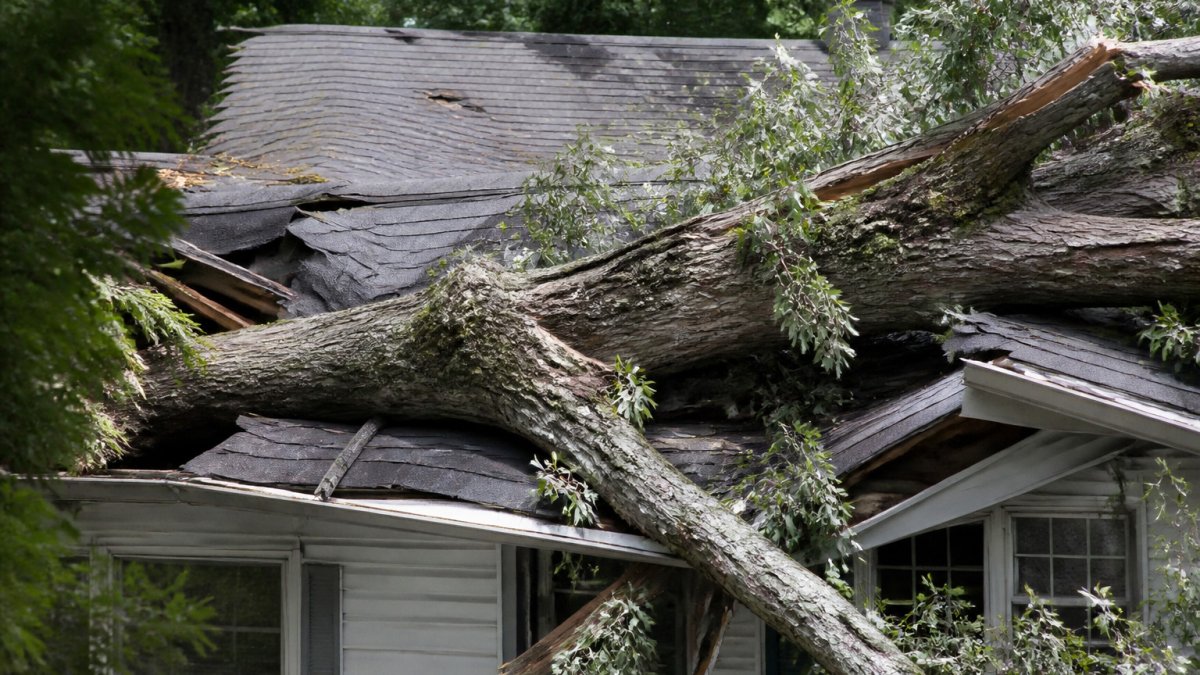
Storm damage to trees is one of the most common and costly risks homeowners face, and most of it is preventable. A tree trimming storm plan means removing the weak, dead, and overextended parts of a tree before high winds, ice, or heavy rain can break them off.
A branch that falls in a 60 mph gust can crush a roof, pull down a power line, or injure someone below.
Watch out: Do not top a tree to "reduce its height" before a storm. Topping creates weak regrowth that often breaks more easily than the original limbs.
Step 1: Walk the Property and Inspect Each Tree for Risk
Walk around every tree near your home, driveway, fence, or power lines, looking from several angles and up as well as down. Many of the most dangerous limbs sit high in the canopy where they are easy to miss.
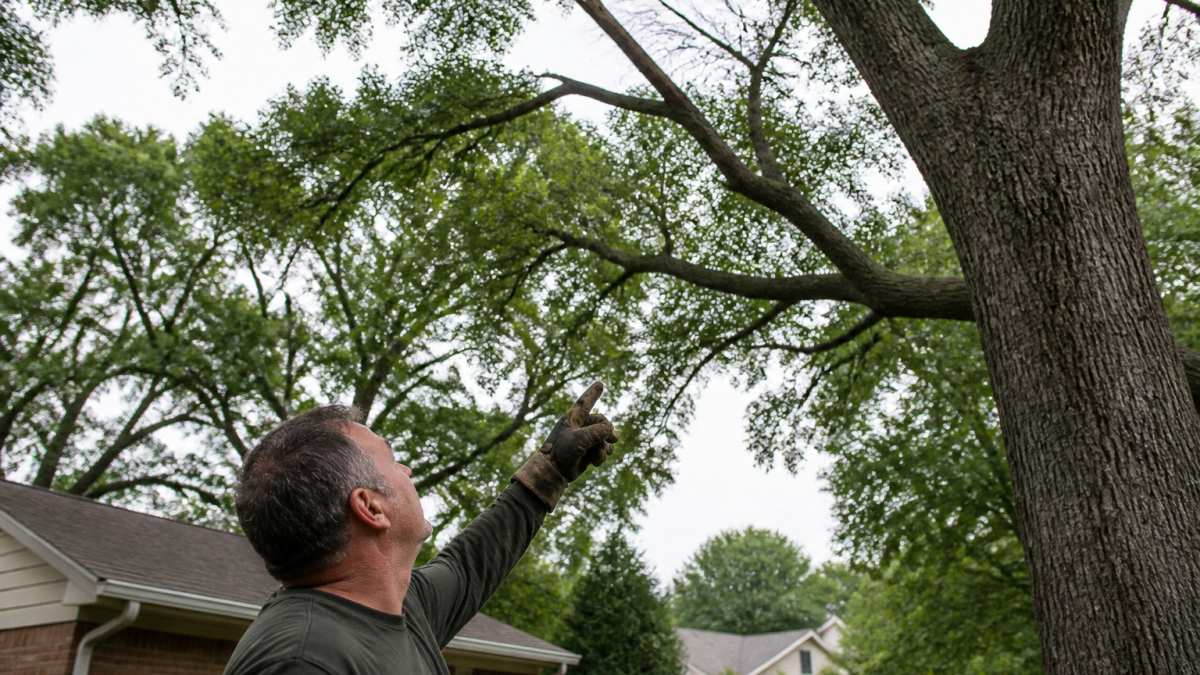
List the trees that need a closer look, noting species, rough height, and what sits under or near each one.
Signs of Dead, Damaged, and Weak Branches
Dead branches are the easiest hazard to spot once you know what to look for:
- Bare twigs or no leaves when others on the tree are in leaf
- Brittle wood that snaps easily or has peeling bark
- Cracks, splits, or cavities where a limb meets the trunk
- Fungal growth, mushrooms, or sawdust-like debris at the base of limbs
- Limbs that are cracked or hanging from a torn seam
Weak branches are harder to see: watch for narrow V-shaped unions where two main stems grow close together, and long, heavy limbs extending far past the rest of the crown.
Structural Defects and Hazardous Trees to Flag
Some problems mean the whole tree needs professional attention, not just a trim:
- Large cracks or open cavities in the trunk
- Leaning trees with raised soil or exposed roots on the lean side
- Root damage from construction, digging, or flooding
- Mushrooms or conks growing at the base of the trunk, which often signal internal decay
- Trees that are already partly uprooted
If you see any of these near a house, driveway, or power line, keep people and vehicles out of the fall zone.
Step 2: Prioritize Which Limbs Need Removal Using a Pruning Checklist
- Remove all dead limbs first, since they are the most likely to fall
- Remove cracked, split, or hanging branches
- Remove branches that cross or rub against each other
- Remove narrow, weak V-shaped unions where possible
- Reduce overextended limbs that reach over roofs, sheds, or fences
- Thin the canopy gently so wind can pass through instead of catching on the crown
- Check that no limb sits within the fall zone of a building or power line
Step 3: Set the Right Timing by Tree Species and Storm Type
Timing is where most storm-safety trimming plans quietly fail. Prune too early and the tree pushes weak regrowth before the storm; too late and wounds cannot seal before the weather hits. The right window depends on the species, your climate, and the tree trimming storm threat you are preparing for.
Timing by Tree Species
- Palms. Remove only dead or dying fronds, and do not prune green fronds unless they pose a hazard. Over-pruning palms removes the food-producing fronds and weakens the crown (Pruning Palms).
Timing by Storm Type
- Summer thunderstorms. These arrive with little warning, so the work is preventive: remove dead wood and weak unions in spring, and keep branches clear of roofs and lines year-round.
The Practical Rule
Heavy snow and ice, hurricane winds, and summer thunderstorms each stress trees differently, so tailor your priorities to the threats most likely where you live.
The right trimming window depends on the species and the storm threat you are preparing for, as summarised below.
| Storm type | Priority | Timing note |
|---|---|---|
| Summer thunderstorms | Remove dead wood and weak unions | Arrive with little warning; prune in spring |
| Palms | Remove only dead or dying fronds | Over-pruning weakens the crown |
Step 4: Keep Branches Clear of Roofs, Fences, and Power Lines
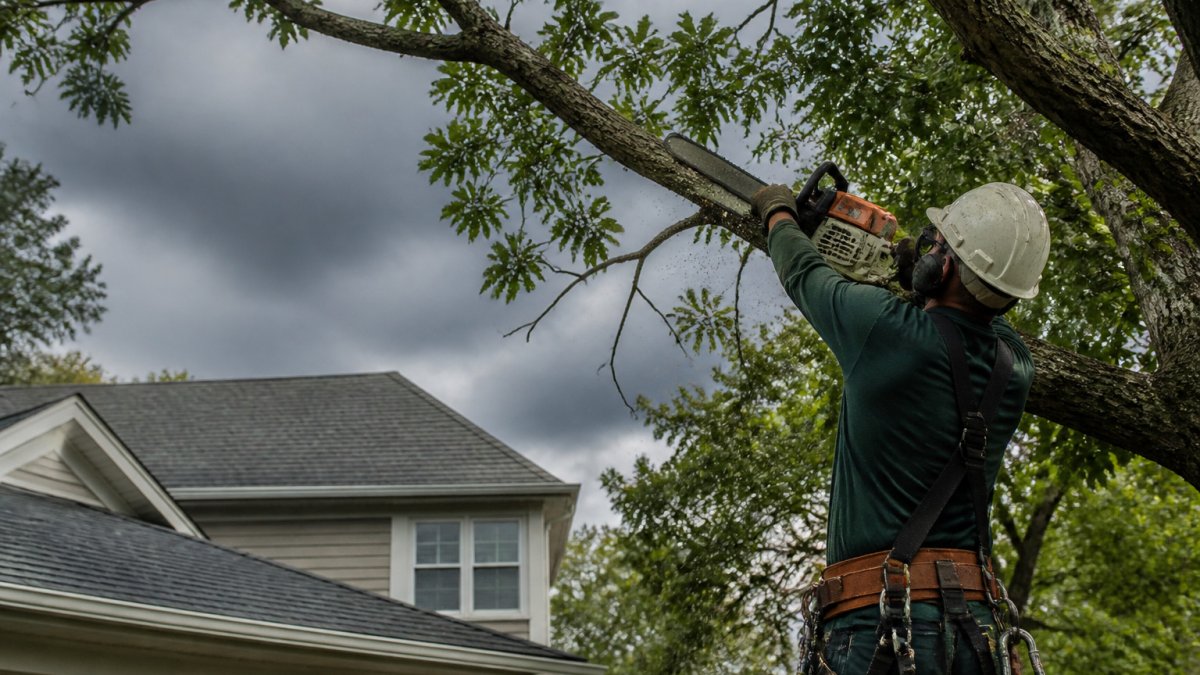
Clearance protects the structure directly. A limb touching a roof abrades shingles, fills gutters with debris, holds moisture against siding, and gives pests a bridge onto the house. A limb over a driveway or fence can break under ice or wind load and damage property or injure someone below. A limb near a power line is a life-safety issue, not a landscaping one.
Why Clearance Matters in a Storm
In a 60 mph gust, a branch that merely sways against a roof in calm weather whips, scrapes, and can tear shingles or break windows. The goal is not to strip the tree to the trunk, but to leave enough space for the branch to move without contact while keeping enough canopy to feed the tree.
Practical Clearance Targets
- Access routes. Keep a clear path for emergency vehicles and access routes, and remove low limbs that could block a driveway after a storm.
Power Lines: The Line You Do Not Cross
- If a branch is touching or near a line, call your local utility company. Utilities typically handle or arrange clearance work near their lines, and many will assess the situation at no charge to the homeowner.
- Do not trim a limb that is growing toward a utility line, and do not try to pull a branch away from a line.
- Report any line contact to the utility provider, and keep people and vehicles well clear until crews arrive.
- If a line is down, stay away and call the utility and emergency services. Downed lines can energize fences, puddles, and the ground around them.
A Simple Clearance Walk
Once a year, walk the property and look up. Note any limb touching or within a few feet of the roof, over a driveway or fence, or growing toward a utility line. Mark those for removal or professional assessment, calling the utility first for line items. That single walk catches most clearance problems that turn into storm damage.
When to Stop DIY and Call a Certified Arborist
Call a certified arborist when any of the following apply:
- The work involves limbs higher than you can safely reach from the ground or a stable ladder
- A branch is near a power line, or any part of the job might bring you close to one
- The tree shows structural defects, decay, or a lean
- A limb is already hanging, cracked, or under tension
- The job would remove a large share of the canopy
- You feel uncertain or uncomfortable at any point
Scheduling Your Storm Prep Trim and Getting a Quote
Pricing depends on the work required. Contact Red Woodpecker Tree Service for a quote.
Get Free Quote from Red Woodpecker Tree Service. Our trained and certified arborists provide tree care services.
Frequently Asked Questions
Is it safe to remove a tree branch from a power line?
No. Branches touching or near power lines should be left to the utility company or a qualified line-clearance arborist. Contact your local electric utility, which handles energy lines, and keep yourself and any equipment well away from the line. Energized wires can cause fatal electrocution even when a branch looks like it is only resting on them. If a limb is tangled in lines after a storm, treat the entire area as live and wait for professionals to confirm it is safe.
When should you avoid trimming trees?
Avoid heavy pruning during periods when trees are stressed, such as extreme heat, drought, or while they are actively leafing out in spring. Many species should also not be pruned during peak nesting season for birds, and some oaks should be pruned only in winter to reduce the risk of oak wilt. Right before a forecast storm is a poor time for major cuts because fresh wounds can be vulnerable, so focus on removing only clearly dead or hazardous limbs during active weather.
How much does professional tree trimming cost?
For a quote, request a free estimate from Red Woodpecker Tree Service.
Can pruning prevent a tree from falling in a storm?
Pruning can reduce the risk of failure but cannot guarantee a tree will stay standing in a severe storm. Removing dead, cracked, or overextended limbs and thinning dense canopy lowers wind load, which is the force wind places on the crown. Structural defects such as large cavities, root damage, or leaning trunks may still make a tree unsafe, so a professional risk assessment is the best way to determine whether pruning is enough.