 how-to
Residential Land Clearing in Middle Tennessee
Last Updated: October 26, 2026
Quick Summary
Residential land clearing middle in Tennessee is the process of removing trees, brush, stumps, and debris from a property to prepare it for construction, landscaping, or other development. The scope varies by property, from selective hazard removal to complete lot clearing to bare ground.
- Stump removal is critical and must be ground below ground level to prevent tripping hazards and pest issues.
- Underground utilities must be marked by calling 811 at least three business days before work begins.
- Land clearing estimates typically include five cost components: mobilization, clearing production, stump grinding, debris handling, and finish work.
- Four layers of regulation apply to residential land clearing: county ordinances, protected tree lists, erosion control requirements, and wetlands or floodplain rules.
- A compliant contractor should provide an approved permit, erosion control plan, insurance proof, and the 811 ticket number before starting work.
Table of Contents
- What Residential Land Clearing Involves
- Forestry Mulching in Middle Tennessee
- Land Clearing for Home Construction
- Land Clearing Permits and Regulations in Tennessee
- Understanding Middle Tennessee Land Clearing Cost
- Preparing Your Property for Land Clearing
- Schedule Your Free Land Clearing Assessment
- Frequently Asked Questions
What Residential Land Clearing Involves
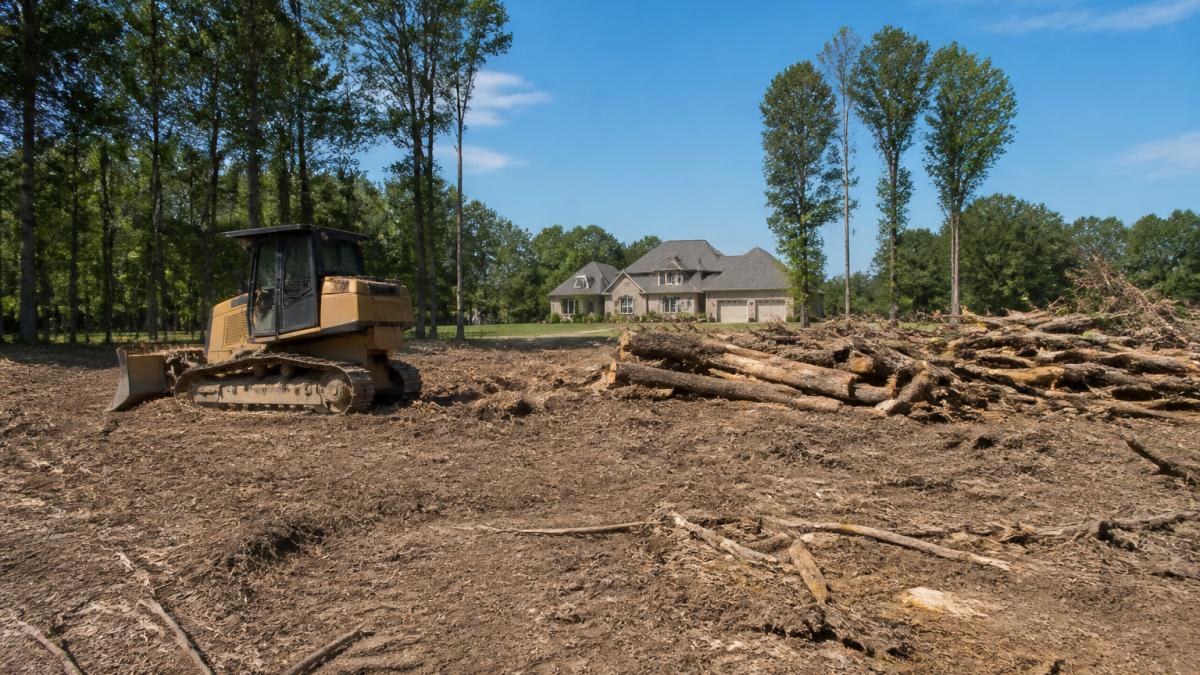
Residential land clearing is the process of removing trees, brush, stumps, and debris from a property to prepare it for construction, landscaping, or other development.
The scope of residential land clearing middle in Tennessee varies by property. Some projects involve selective removal of specific hazards. Others require complete lot clearing to bare ground.
Brush and Vegetation Removal
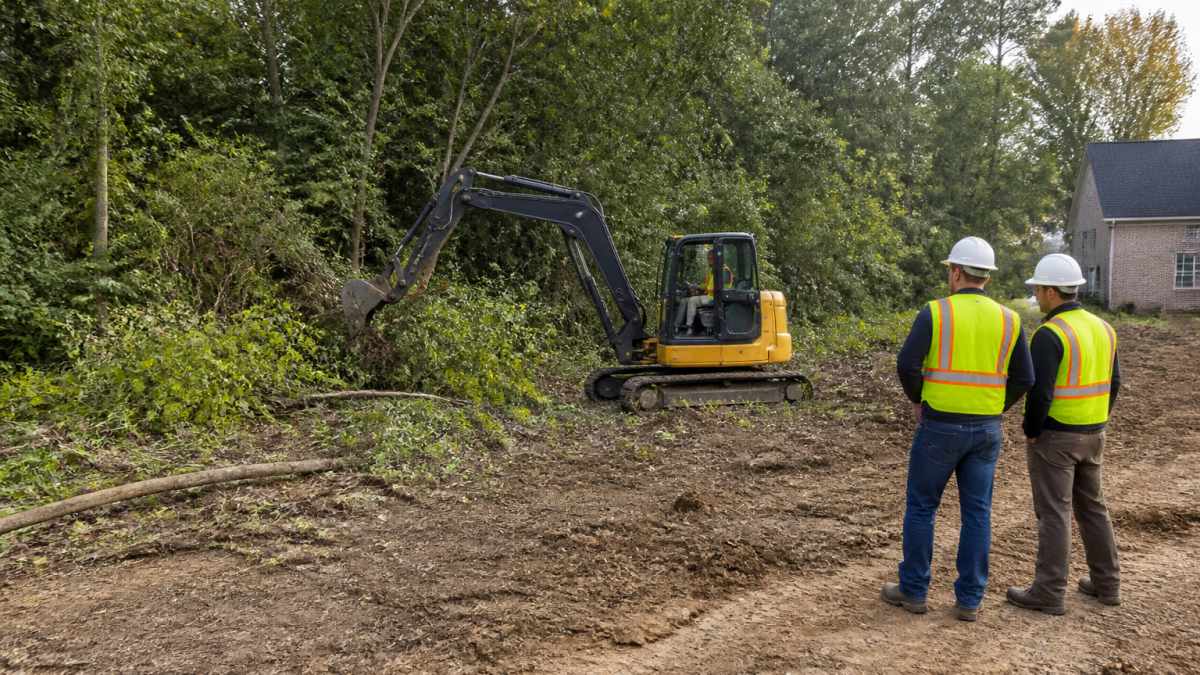
Brush and vegetation removal is often the first step in clearing a residential property. This includes removing saplings, undergrowth, vines, and low-hanging branches that obstruct the lot.
Our team uses both manual and mechanical methods depending on vegetation density and property size. Hand crews handle delicate areas near structures or utilities. Larger sections use skid steers and brush cutters for efficiency.
Tree and Stump Removal
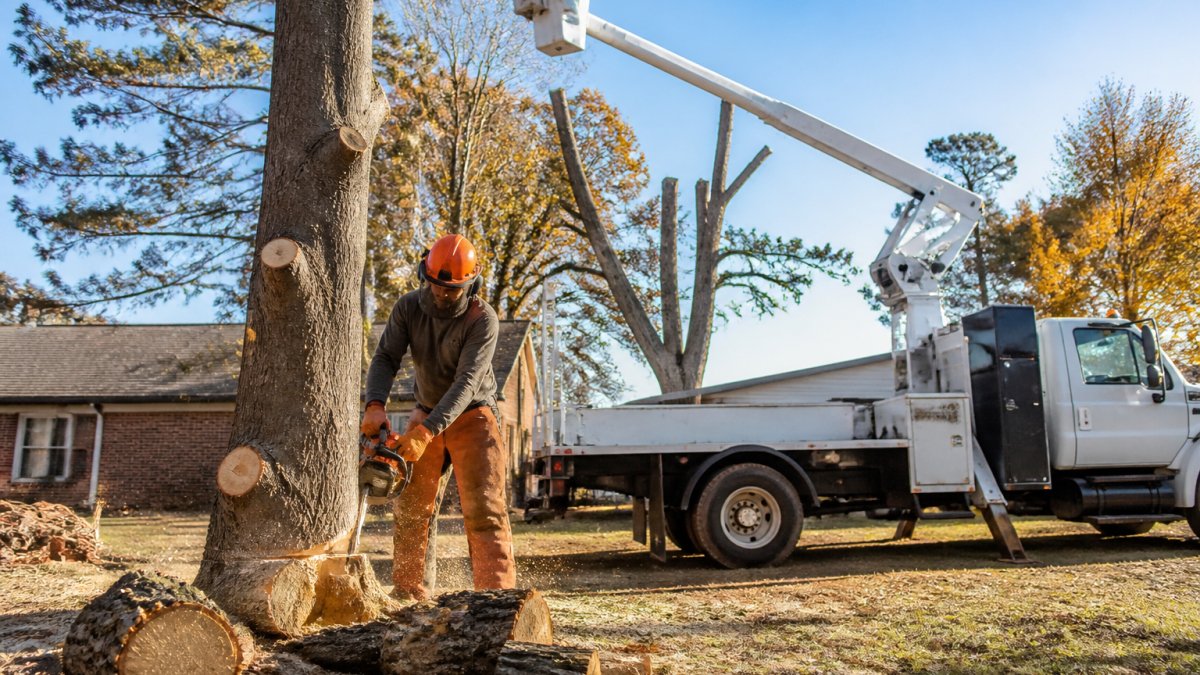
Trees require careful assessment before removal. We evaluate each tree's health, size, location, and proximity to structures or property lines. Dead or diseased trees come down first, they pose safety risks and can spread disease to healthy trees.
Stump removal is critical for residential land clearing middle in Tennessee. Stumps left behind create tripping hazards, harbor pests, and complicate future grading work.
Site Preparation and Grading
After debris removal, the property requires grading and leveling. Uneven terrain creates drainage problems and complicates construction.
Forestry Mulching in Middle Tennessee
For residential land clearing middle in Tennessee, forestry mulching is ideal when you're preparing land for pasture, wildlife habitat, or natural landscaping. It's less suitable for construction sites where you need a clean, bare foundation.
Land Clearing for Home Construction
Building a home requires specific site preparation. The lot must be cleared of all vegetation, trees, and stumps. The foundation area needs to be graded to exact specifications, typically sloped away from the building for drainage.
Before any clearing begins, we locate underground utilities. Gas lines, electric conduits, septic systems, and water mains must be marked and avoided. Your contractor should call 811 to have utilities marked before we start work.
Land Clearing Permits and Regulations in Tennessee
Permitting for residential land clearing is not one rule, it is a stack of overlapping rules from different agencies. Before a single tree comes down, a homeowner should confirm which of the following apply to the lot. This is the step most clearing quotes skip, and it is the one that most often delays a project or triggers a stop-work order.
The four layers of regulation to check
- County or municipal tree and land-disturbance ordinances. Most counties and cities in the region regulate tree removal on residential lots, but the triggers vary widely. Common thresholds include clearing above a set percentage of the lot, removing trees above a certain diameter at breast height (DBH), or disturbing more than a set square footage of soil. Call the local planning or codes department and ask three specific questions: Is a tree-removal permit required for my lot size? Is there a DBH threshold below which removal is exempt? Is a site plan or tree survey required with the application?
- Protected and heritage tree lists. Some jurisdictions maintain lists of protected species (certain oaks, hickories, and dogwoods are common) and heritage trees above a size threshold. Removal may require a variance, a mitigation planting plan, or replacement fees. Ask for the current protected-species list in writing rather than relying on a verbal answer.
- Erosion and sediment control requirements. Any disturbance above the local threshold typically requires a sediment and erosion control plan, and often a state-issued construction general permit if the disturbed area exceeds one acre. Even below one acre, many jurisdictions require silt fence, a stabilized construction entrance, and a designated tree-save area shown on the plan. The plan is usually prepared by the contractor or a civil designer and must be approved before grading.
- Wetlands, streams, and floodplain. If the lot contains a wetland, a perennial stream, or lies in a mapped floodplain, a federal permit from the U.S. Army Corps of Engineers may be required under Section 404 of the Clean Water Act, and the local floodplain administrator may require additional review. The Corps' jurisdictional determination process can take weeks, so this is the item to check first on any lot with low, wet ground.
Easements, utilities, and property lines
Permits are only half the pre-project check. The other half is legal encumbrances on the lot:
- Utility easements. Clearing within a recorded easement can require the utility's approval, and damaging a marked line is the homeowner's liability. Call 811 at least three business days before work begins, which is the standard notice period for the national call-before-you-dig system.
- Conservation easements and deed restrictions. Some subdivisions and rural tracts carry deed restrictions or conservation easements that limit clearing independent of any government permit. A title search or a call to the homeowners association will surface these.
- Property lines. A survey is the only reliable way to confirm where the lot line sits. Clearing a neighbor's trees, even by mistake, can expose the homeowner to treble damages under state timber-trespass law in many jurisdictions.
What a compliant contractor should hand you before mobilization
A legitimate clearing contractor should be able to produce, on request: a copy of the approved tree-removal or land-disturbance permit, the approved erosion control plan, proof of general liability and workers' compensation insurance, and the 811 ticket number. If any of those are missing, the schedule risk and the liability sit with the homeowner, not the contractor. Red Woodpecker Tree Service can help you understand local regulations and handle permit coordination as part of your project.
Understanding Middle Tennessee Land Clearing Cost
Land clearing is priced per project, not per hour, because every lot carries a different mix of acreage, vegetation, access, and debris. That said, homeowners can build a realistic budget by understanding how contractors actually assemble a number. The framework below is the same one used to build a written estimate, so you can compare quotes line by line instead of guessing at a single lump sum.
How contractors build the price
A clearing estimate is typically the sum of five cost buckets:
- Mobilization and equipment. Getting the excavator, skid steer, forestry mulcher, or dozer to the site and back. This is a fixed cost per project, so it hits small lots hardest. A quarter-acre job can carry the same mobilization charge as a two-acre job.
- Clearing production. Priced by the acre or by the tree, depending on density. Light brush and scattered saplings clear far faster per acre than mature hardwood with dense understory. Contractors estimate production in acres per day and multiply by equipment and labor day rates.
- Stump grinding and root removal. Usually priced per stump by diameter, with a separate charge for grinding below grade and hauling the grindings. Leaving stumps in place is cheaper but forecloses future grading and building.
- Debris handling. The biggest swing factor. Forestry mulching leaves material on site and is the lowest-disposal-cost method. Chipping and hauling, burning (where allowed), or hauling to a landfill each add cost, and landfill tipping fees plus trucking time are passed through.
- Finish work. Grading, seeding, silt fence, and driveway base preparation. Often quoted as a separate line so the homeowner can see what bare-ground clearing costs versus a build-ready finish.
The variables that move the number most
- Acreage. Cost per acre generally falls as acreage rises because mobilization and setup are spread over more ground. A half-acre lot carries a higher per-acre cost than a five-acre tract.
- Vegetation density and tree size. A pasture with scattered trees is a different job from a lot choked with vines, understory, and large hardwoods. Diameter and species drive chainsaw and grinder time.
- Access. If equipment can drive straight onto the lot, cost stays low. If the crew has to build a temporary access road, use a smaller machine, or hand-carry material to the street, the labor hours climb.
How to read and compare written estimates
A useful estimate separates the five buckets above rather than presenting one total. When comparing two quotes, normalize them: confirm both include stump grinding to the same depth, both specify the disposal method, both list the finish grade, and both state whether permits and erosion control are included. A lower total that excludes stump grinding or hauling is not actually lower.
Budgeting guardrails
Because pricing is site-specific, the honest way to budget is to get two or three written estimates built on the same scope and compare the line items, not the totals. Expect the estimate to be free and the site visit to take 30 to 60 minutes on a typical residential lot. Red Woodpecker Tree Service provides written estimates that break out clearing, stump grinding, and debris handling separately, so you can see exactly what each phase of the project costs before you commit.
Contractors assemble clearing estimates by combining five main cost components.
| Cost Component | Description | Notes |
|---|---|---|
| Mobilization and equipment | Getting machinery to and from site | Fixed cost per project; hits small lots hardest |
| Clearing production | Removing trees, brush, and vegetation | Priced by acre or tree; varies by density |
| Stump grinding and root removal | Grinding stumps below grade and hauling | Usually priced per stump by diameter |
| Debris handling | Disposal of cleared material | Mulching, chipping, burning, or landfill options |
| Finish work | Grading, seeding, silt fence, driveway base | Often quoted separately from bare-ground clearing |
Preparing Your Property for Land Clearing
Before work begins, prepare your property to ensure a smooth project.
Discuss property access with your contractor. Identify the best routes for equipment entry and exit.
Plan for debris management. Decide whether you want material hauled away or chipped for mulch.
Ensure underground utilities are marked before work starts. Call 811 or your local utility locating service to have gas, electric, water, and other lines marked.
Schedule Your Free Land Clearing Assessment
Understanding your property's clearing needs starts with a professional assessment. Red Woodpecker Tree Service offers free estimates for residential land clearing middle in Tennessee.
Our certified arborists and experienced crew bring expertise to every project.
Contact Red Woodpecker Tree Service today to schedule your free assessment. We'll walk your property, answer your questions, and provide a detailed estimate with no obligation.
Frequently Asked Questions
How much does residential land clearing cost in Middle Tennessee?
Pricing depends on lot size, vegetation density, terrain, equipment access, and debris removal method. Smaller residential lots typically cost less than larger acreage. For an accurate estimate, contact Red Woodpecker Tree Service for a free site assessment. Our team evaluates your specific property conditions and provides a detailed quote based on the scope of work needed.
Do I need a permit to clear trees on my residential property?
Yes, most areas in Tennessee require permits for tree removal, especially for protected species or trees in sensitive areas. Local regulations vary by county and municipality. Before clearing begins, check with your local county clerk or planning department about permit requirements. Red Woodpecker Tree Service can help you understand local regulations and handle permit coordination as part of your project.
What is the difference between forestry mulching and traditional land clearing?
Forestry mulching grinds trees, brush, and vegetation into mulch on-site, reducing debris removal costs and erosion risk. Traditional clearing removes trees and brush separately, with stump grinding and debris hauling as additional steps. Your choice depends on your property goals and budget.
How long does residential land clearing typically take?
Timeline depends on lot size, vegetation density, and equipment access. Small residential lots may take one to three days, while larger acreage or complex terrain can take a week or longer. Permit approval, weather delays, and the need to protect utilities or nearby structures also affect scheduling. Red Woodpecker Tree Service provides a timeline estimate during your initial site assessment.
Residential land clearing transforms overgrown lots into functional properties. The process requires expertise, proper equipment, and knowledge of local regulations. Red Woodpecker Tree Service brings all three to every project in Middle Tennessee. Our certified arborists assess your property, handle permitting, manage the work safely, and deliver results that prepare your land for whatever comes next. Get your free assessment and see why property owners trust us with their clearing projects.