 ultimate-guide
Tree Removal Insurance Requirements Guide 2026
Table of Contents
- Why Tree Removal Insurance Requirements Matter Before You Hire
- Homeowners Insurance Tree Damage Coverage: What Your Policy Pays For
- Filing a Tree Damage Insurance Claim: Step-by-Step Process
- Hiring Insured Tree Service Contractors: A Vetting Checklist
- Post-Storm Emergency Mitigation and Tree Health Assessments
- Tree Removal Insurance Requirements: Contractor Licensing and Safety Standards
- Conclusion: Protecting Your Property and Your Claim
- Frequently Asked Questions
Last Updated: October 3, 2026
Why Tree Removal Insurance Requirements Matter Before You Hire
A tree removal insurance requirements guide matters because the wrong contractor can turn a covered loss into a personal financial disaster.
This guide walks through both sides of the equation: what your policy actually covers and how to verify that the company you hire carries its own protection.
The stakes are higher than most homeowners realize. Insurance Information Institute guidance on homeowners claims notes that standard policies treat tree removal differently depending on whether the tree hit a structure or simply fell in the yard.
Below, we break down coverage rules, the claim filing process, and a vetting checklist.
Homeowners Insurance Tree Damage Coverage: What Your Policy Pays For
Homeowners insurance tree damage coverage typically pays to remove a tree only when it strikes a covered structure, blocks a driveway, or creates an accessibility hazard. A tree that falls in an open field usually stays where it lands, at your expense.
When Removal Is Covered vs. When It Is Not
Most policies draw a hard line between damage and debris. If a falling tree hits your house, garage, or fence, the removal cost folds into the property damage claim. If it lands in the lawn, removal is generally your responsibility.
- Covered: Tree strikes the dwelling, an outbuilding, or a fence
- Covered: Tree blocks a driveway or ramp, preventing access
- Covered: Tree damages a neighbor's structure, subject to liability rules
Policy Limits, Deductibles, and Neighbor Liability
Debris removal often carries a separate cap, frequently a percentage of your dwelling coverage rather than the full policy limit. Your deductible applies before any payout, so a small removal bill may fall entirely to you.
Neighbor liability turns on negligence. For a clear breakdown of how liability is assigned, the Insurance Information Institute on who pays for fallen trees is a useful reference.
Filing a Tree Damage Insurance Claim: Step-by-Step Process
Filing a tree damage insurance claim follows a predictable sequence: document, report, protect, then repair. Skipping any step weakens your position, and the order matters more than most homeowners expect.
- Photograph everything before moving a single branch. Capture the tree, the damage, and wide shots showing the tree's position relative to the structure. Include a reference object for scale.
- Call your insurer to open the claim and get a claim number. Ask whether the loss falls under the dwelling, other structures, or debris removal coverage line.
- Prevent further damage with tarps or temporary boarding. Most policies require reasonable mitigation, and unreimbursed mitigation is one of the most common disputes.
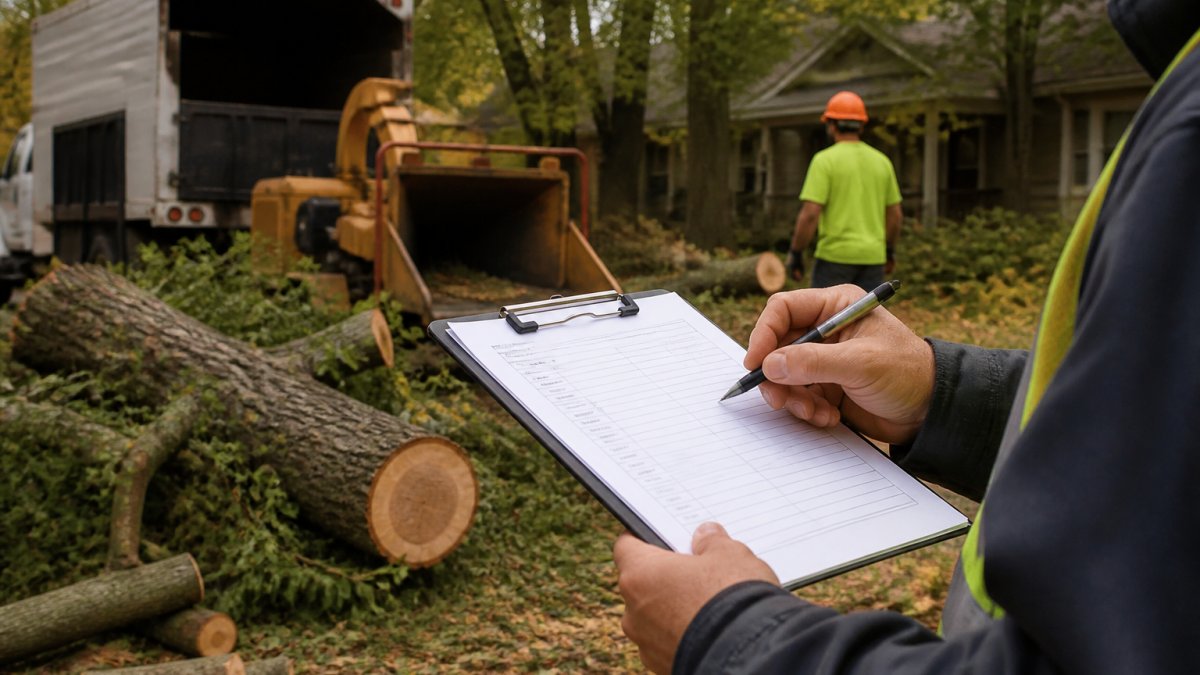
- Get written removal estimates from licensed, insured contractors. Two or three estimates give the adjuster a defensible range.
- Meet the adjuster on site and walk the damage together. Point out anything they might miss, including damage to gutters, siding, and underground utilities.
- Keep every receipt for emergency work, lodging, and materials. Submit them with the claim, not after settlement.
Documentation and Adjuster Coordination
Adjusters work from evidence. Time-stamped photos, a written inventory of damaged property, and contractor estimates create the paper trail that supports your payout.
Two documents carry outsized weight. A certified arborist's report establishes the tree's condition before the loss, and a contractor's itemized estimate establishes the cost of removal. When those two documents agree on causation and scope, the claim moves faster.
Common Denial Reasons and How to Avoid Them
Claims get denied for reasons that are almost always preventable. The most frequent is neglect: a policyholder knew a tree was dead, diseased, or leaning and did nothing. Insurers also deny when removal was not required to protect a structure, when the homeowner removed debris before inspection, or when the loss fell under a policy exclusion.
The denials that surprise homeowners most tend to fall into a handful of patterns:
- Act-of-God vs. negligence. A healthy tree felled by a storm is generally treated as an act of God, and removal of the debris in an open yard is typically not covered. But if the tree was visibly hazardous and the owner had notice, the carrier may argue negligence and shift or deny the claim.
- Pre-inspection removal. Cutting up a fallen tree before the adjuster sees it destroys the evidence used to value the loss. Many carriers deny reimbursement for pre-inspection removal, even when the removal was necessary.
- Maintenance history. A pattern of ignored arborist recommendations, documented complaints from neighbors, or prior claims on the same tree can be used to argue the loss was foreseeable.
Post-Storm Emergency Mitigation Before the Adjuster Arrives
Most policies require you to take reasonable steps to prevent further damage, and carriers often reimburse that work separately from the removal itself. The catch is that emergency mitigation and permanent repair are different line items, and mixing them can complicate the claim.
- Tarp the roof over any breach and photograph the tarp in place.
- Board broken windows and secure openings against rain.
- Move vehicles and furniture clear of leaning trees and damaged limbs.
Document the mitigation with the same care as the original damage. A dated photo of a tarped roof is often the difference between a reimbursed mitigation line and a denied one.
Hiring Insured Tree Service Contractors: A Vetting Checklist
Hiring insured tree service contractors means verifying two separate policies: general liability and workers' compensation. One protects your property. The other protects you from a lawsuit if a worker is injured on your land.
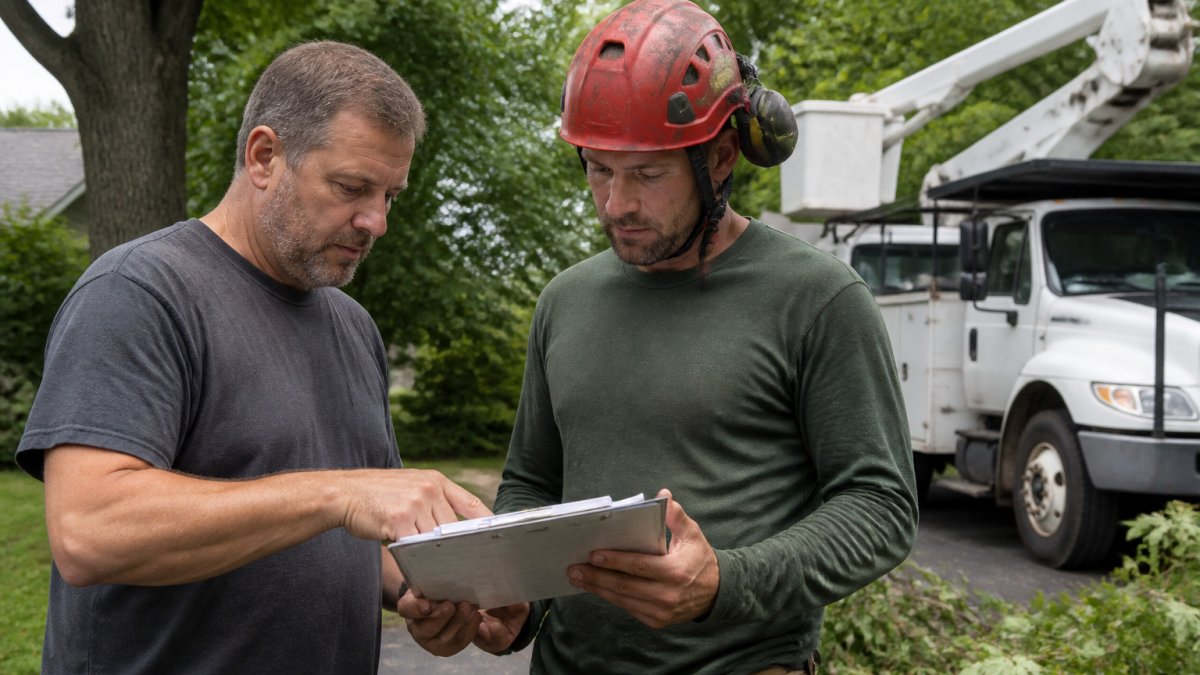
General Liability vs. Workers' Compensation Coverage
General liability insurance covers third-party property damage and bodily injury caused by the contractor's work. If a branch crushes your roof during removal, this policy responds. Workers' compensation covers the crew's medical costs and lost wages if someone is hurt on the job. Without it, an injured worker can pursue you directly.
| Policy Type | What It Covers | Why You Need to Verify It |
|---|---|---|
| General liability | Property damage, bodily injury to others | Protects your home if the crew damages it |
| Workers' compensation | Employee injuries on the job | Blocks injury lawsuits against you |
| Commercial auto | Vehicle accidents en route | Covers damage from trucks and equipment |
| Certificate of insurance | Proof of active coverage | Confirms policies are current |
How to Read a Certificate of Insurance (COI)
A certificate of insurance is a one-page summary issued by the contractor's insurer or agent. It is not the policy itself, and it does not guarantee coverage, but it is the fastest way to spot a problem before work begins. Here is what to check, line by line:
- Named insured. The name on the COI must match the company you are hiring, not a related entity or an individual owner. A COI issued to a different business name is a red flag.
- Policy effective dates. Confirm the coverage is active on the day work is scheduled. A COI that expired last month tells you nothing about today.
- General liability limits. Look for the per-occurrence and aggregate limits. Higher limits mean more protection if the crew damages your home or a neighbor's property.
- Workers' compensation line. If the box is blank or marked "exempt," ask why. A sole proprietor may legitimately be exempt, but a multi-person crew is not.
- Certificate holder. Ask to be listed as a certificate holder so the insurer notifies you if the policy is canceled mid-job.
- Agent contact. Call the phone number on the COI, not a number the contractor gives you, and confirm the policy is active and the limits are accurate.
Licensing, Safety Standards, and Other Verification Steps
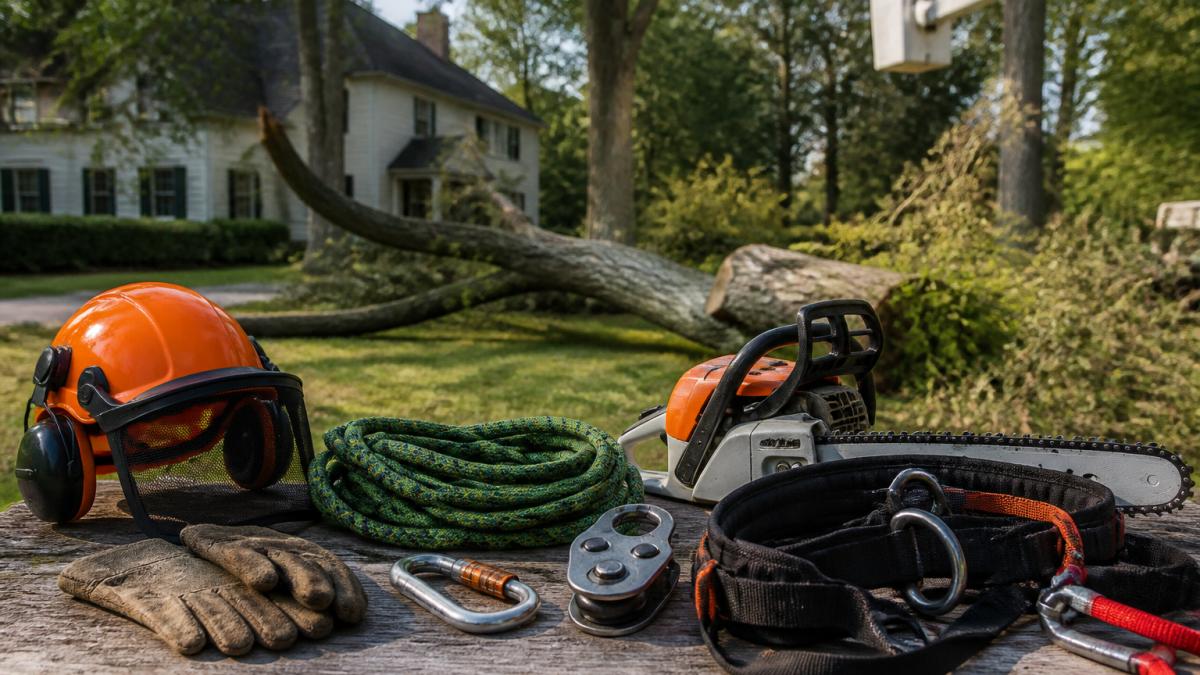
Insurance is only one part of the vetting. Cross-check contractor licensing with your state or local authority, and confirm the crew carries safety standards training for climbing gear and bucket truck operations. Ask whether the company uses certified arborists for assessments and whether it carries commercial auto coverage for its trucks and chippers.
A few practical questions separate a professional operation from a risky one:
- "Can you email me a current COI today?" A legitimate contractor can produce one within hours.
- "Who is your insurance agent, and can I call them?" Hesitation is a disqualifier.
- "Are your climbers certified, and do you carry ANSI-compliant gear?" Safety training reduces the chance of an accident that becomes your liability.
Post-Storm Emergency Mitigation and Tree Health Assessments
Emergency mitigation after a storm is about stopping further damage, not finishing the job. Tarp the roof, move vehicles clear of leaning trees, and keep people away from downed power lines. Document everything before cleanup begins.
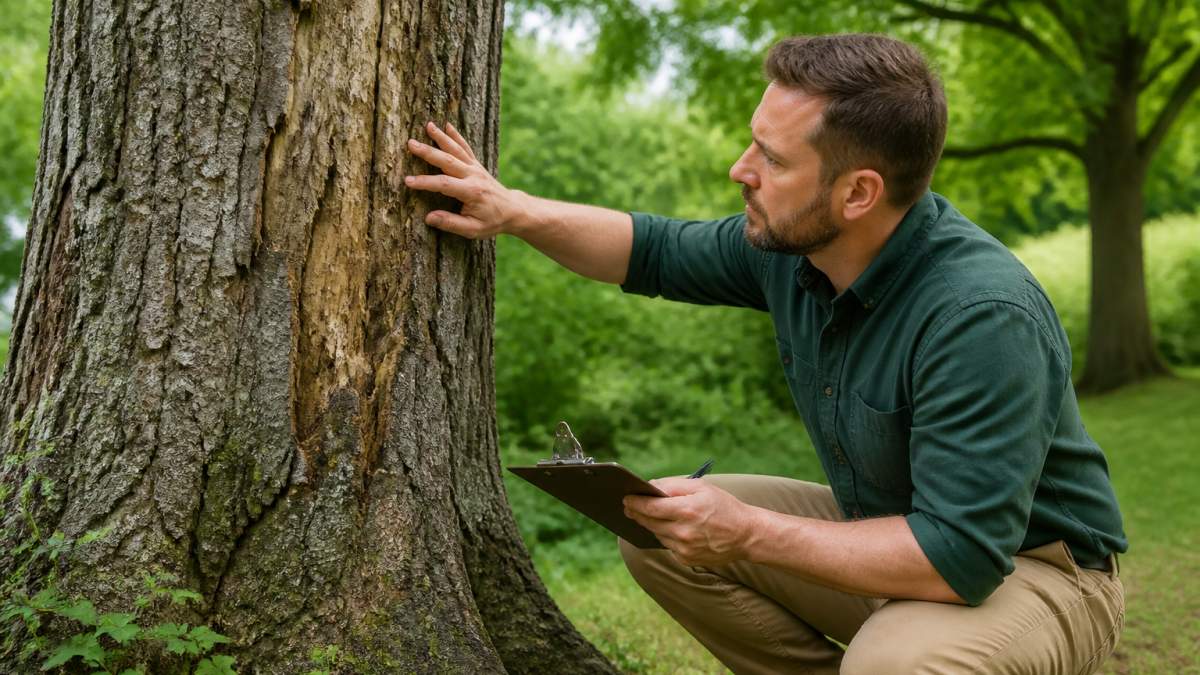
A tree health assessment from a professional arborist separates the trees that can be saved from those that must come down. Signs that warrant a call include sudden leans, cracked trunks, hollow sounds when tapped, and fungal growth at the base.
Tree Removal Insurance Requirements: Contractor Licensing and Safety Standards
Tree removal insurance requirements vary by state, but the core expectation is consistent: a legitimate contractor carries general liability and workers' compensation coverage, holds any required contractor licensing, and follows recognized safety standards for the work. OSHA tree care industry safety guidance outlines the hazards that drive these requirements, from falls and electrical contact to struck-by injuries.
An insured contractor also carries commercial auto coverage and can produce a certificate of insurance on request. If a company hesitates to provide documentation, treat that as a disqualifier. Risk mitigation starts with verification, and it protects both your property and your claim.
Conclusion: Protecting Your Property and Your Claim
Storm damage rarely waits for a convenient moment, and the decisions you make in the first few hours shape whether your claim holds up. The homeowners who avoid costly surprises are the ones who verify coverage before they need it and hire contractors who can prove their own protection. Red Woodpecker Tree Service provides trained and certified arborists, licensed and insured crews, modern equipment, and 24/7 emergency storm response when a tree comes down at the worst possible time.
Frequently Asked Questions
What type of insurance should a tree removal company have?
A tree removal company should carry general liability insurance and workers' compensation coverage. General liability protects your property if the crew damages your home or fence. Workers' compensation covers injuries to crew members while on your property. Ask for a certificate of insurance and verify the policy is active. Without these, you could be held responsible for accidents or damage, and your homeowners insurance may deny your claim.
Does homeowners insurance cover tree removal after a storm?
Homeowners insurance tree damage coverage typically pays for removal if the tree hits a covered structure like your house, garage, or fence. Most policies also cover debris removal up to a set limit, often $500 to $1,000. If the tree falls in the open yard without damaging anything, removal is usually your responsibility. Check your policy limits and deductible before filing a claim.
What should I look for in a tree service provider's insurance certificate?
Look for the policy effective dates, coverage amounts, and the named insured matching the company you hired. General liability should be at least $1 million per occurrence. Workers' compensation should be listed if the company has employees. Call the insurance agent to confirm the policy is active. This step is critical when hiring insured tree service contractors and prevents claim denials.
How do I file an insurance claim for a fallen tree on my property?
Start by documenting the damage with photos and video. Contact your insurance company immediately to report the claim. Get a written estimate from a licensed tree service contractor. Keep all receipts for emergency mitigation like tarping or temporary repairs. An adjuster will inspect the damage. Filing a tree damage insurance claim promptly and providing thorough documentation speeds up the process and reduces denial risk.
What is the difference between general liability and workers' compensation for tree services?
General liability covers third-party property damage and bodily injury, such as a branch falling on your roof or a neighbor's fence. Workers' compensation covers medical costs and lost wages if a crew member is injured on your property. Both are essential. If a contractor lacks workers' compensation, you could be liable for their injuries. Always verify both coverages before work begins.
Are tree removal companies required to be licensed and insured?
Licensing requirements for tree removal vary by state and municipality. Many states require a contractor license, and some cities require a permit for removal. Insurance, however, is universally expected. Reputable companies carry general liability and workers' compensation. Always ask for proof of licensing and insurance before hiring. Unlicensed or uninsured contractors put you at financial risk if something goes wrong.