 blog
Stump Grinding Services: What to Know Before Hiring
Table of Contents
- What Stump Grinding Services Actually Do
- Stump Removal vs. Stump Grinding: Which One You Need
- How Long Does Stump Grinding Take
- Understanding Stump Grinding Cost Factors
- What Happens During and After: The Complete Process
- Stump Grinding Cleanup and Site Restoration
- How to Hire a Professional Stump Grinding Service
- Frequently Asked Questions
Last Updated: October 7, 2026
What Stump Grinding Services Actually Do
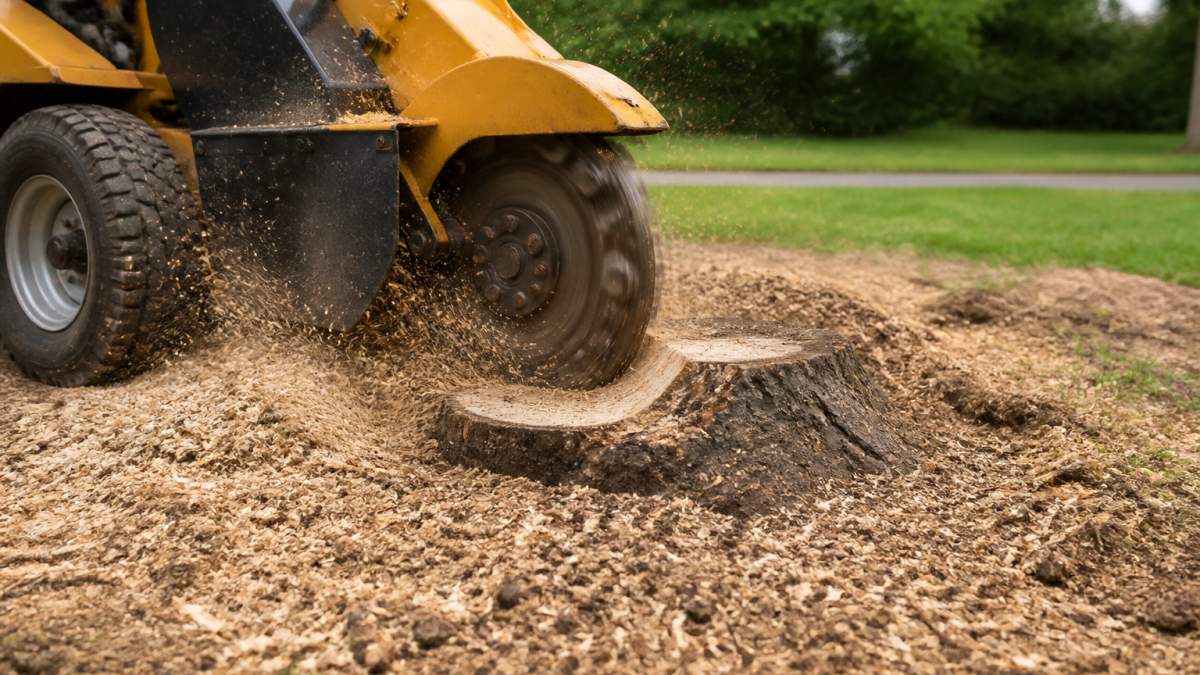
Stump grinding services remove tree stumps by mechanically grinding them below ground level using specialized equipment. The process reduces what's left of a felled tree into small wood chips and sawdust, making the area usable again. Unlike full removal, grinding leaves the root system in place but eliminates the visible stump and the hazard it creates.
We use professional-grade grinders that can access tight spaces and handle stumps of varying sizes. The equipment breaks down the stump into manageable debris that can be hauled away or left as mulch for landscaping. This approach saves time and cost compared to digging out the entire root system, which is why most property owners choose grinding when they need the space cleared quickly.
The service works well for residential yards, commercial properties, and areas where access is reasonable. It's particularly valuable after storm damage when multiple trees need removal and the landscape needs restoration. What makes grinding practical is that it requires minimal site disturbance compared to other removal methods.
Stump Removal vs. Stump Grinding: Which One You Need
Stump removal means extracting the entire stump and root system from the ground, leaving a hole that must be filled. Stump grinding grinds the stump below surface level, leaving roots intact but eliminating the visible hazard.
Grinding is faster and less invasive. It typically takes a few hours rather than a full day or multiple visits. The equipment does the heavy lifting, and cleanup is straightforward. Most property managers choose grinding when they need fast results and minimal landscape disruption.
Full removal is necessary if you plan to plant a new tree in that exact spot, build a structure there, or if the stump is in a high-traffic area where regrowth is a concern. Removal also eliminates any possibility of sprouting.
For most situations, clearing overgrown areas, opening up yard space, removing hazardous stumps, grinding solves the problem effectively. Red Woodpecker Tree Service recommends grinding unless you have a specific reason to remove the entire root system.
How Long Does Stump Grinding Take
Most stump grinding jobs take a few hours, depending on stump diameter, soil conditions, and access. Small stumps may take 30-60 minutes. Larger stumps or multiple stumps on the same property extend the timeline.
Access is the biggest variable. If the grinder can reach the stump easily with clear sightlines and stable ground, work moves quickly. Tight spaces near fences, buildings, or underground utilities require slower, more careful operation. Wet soil or rocky ground also increases time because the equipment must work harder.
Most professional services can handle a typical residential stump in a single visit. Multiple stumps are often completed in one day if they're clustered together. We schedule jobs based on actual site conditions, not just stump count, to give accurate time estimates.
The timeline also includes cleanup. After grinding, debris removal takes another 30-60 minutes depending on the volume and whether you want the wood chips hauled away or left on-site for mulch.
Understanding Stump Grinding Cost Factors
Stump grinding quotes are built from several inputs: stump diameter, access, quantity, and debris handling. Understanding how each one moves the number lets you compare estimates instead of guessing whether a quote is fair.
Stump diameter. Grinders are sized to the stump, and price generally tracks the widest cross-section at ground level, not the height of the visible stump.
Access. This is usually the single biggest swing factor. A stump in an open front yard that a self-propelled grinder can roll straight up to is the cheapest scenario.
Quantity. Many providers charge per stump with a minimum fee, then discount the per-stump rate when several stumps are ground in one visit.
Debris handling. Leaving the wood chips on-site as mulch is typically the least expensive option.
Example scenarios. These illustrate how the factors combine, not fixed prices:
- One 12-inch stump in an open yard, chips left on-site: the simplest job, base minimum fee, minimal setup, quick grind.
- One 30-inch stump near a fence, chips hauled away: larger diameter plus restricted access plus disposal, the highest-cost single-stump scenario.
- Five stumps of mixed size across an accessible yard, chips left on-site: per-stump discount applies, but mobilization is paid once, usually the best value per stump.
- A stump on a steep slope or behind a narrow gate: access may require a smaller machine or extra labor, and some providers will decline the job if the grinder cannot safely reach it.
What a written estimate should itemize. A useful quote lists the stump count and approximate diameters, the grinding depth, whether chips are left or removed, whether the hole is backfilled, and any access surcharges.
What Happens During and After: The Complete Process
Before the Work Begins
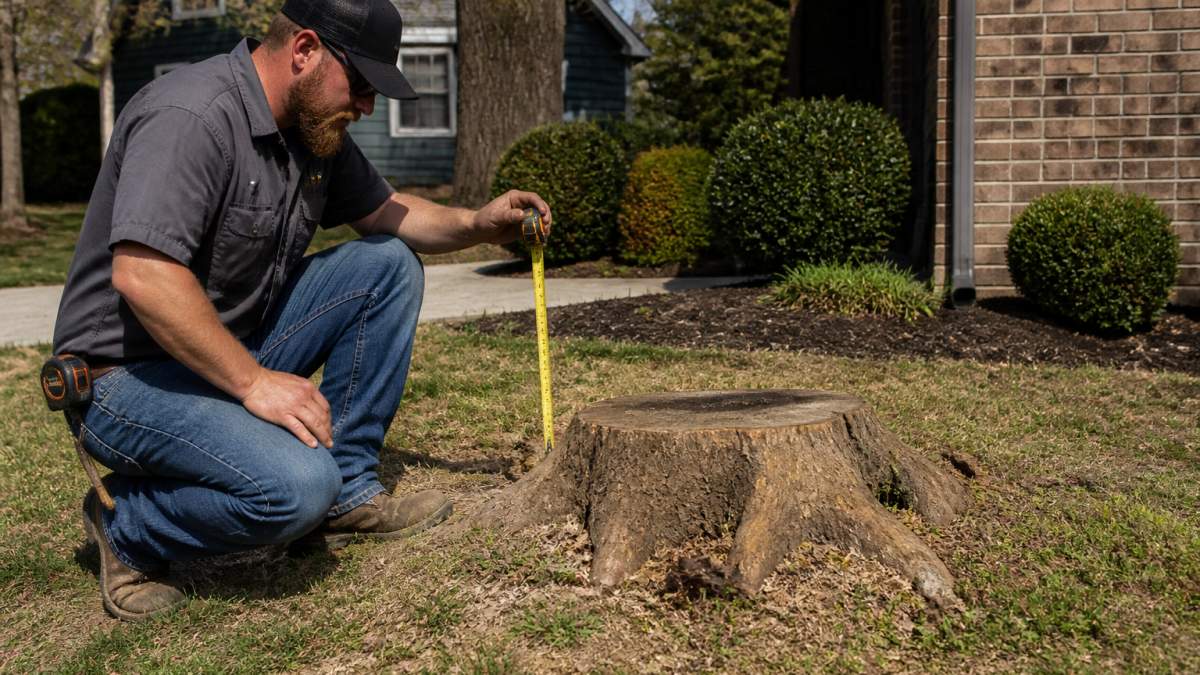
Professional stump grinding starts with a site inspection. The service provider evaluates the stump size, soil type, proximity to structures and utilities, and equipment access. They check for underground lines using locating services (call 811 in most areas) to avoid damaging gas, electric, water, or telecommunications lines. This step is non-negotiable for safety.
You'll discuss debris removal options: haul it away, leave it for mulch, or chip it for landscaping. The service confirms the grinding depth and any special considerations like protecting nearby plants or property features. This conversation prevents surprises and ensures the work meets your expectations.
During Grinding
The grinder operator positions the equipment and begins grinding the stump in passes, working from top to bottom. The machine's teeth break down the wood into chips and sawdust. Operators control depth carefully, grinding below grade but stopping before hitting root systems too deep to matter. The process is loud but straightforward.
Grinding creates significant dust and flying debris, so the operator wears protective gear and controls the work area. The operation typically produces a pile of wood chips equivalent to the stump's volume.
Stump Grinding Cleanup and Site Restoration
After grinding, the site must be cleared. Wood chips are either hauled away or left on-site. If left behind, they make excellent mulch for landscaping or pathways. The grinding area is graded smooth, and the landscape is restored to usable condition.
Some services include final grading and site cleanup in their pricing. Others charge separately. Clarify this during the estimate so you understand what "complete" means.
If you plan to replant or build in that area, ask whether the soil needs amendment or compaction. Professional services can recommend next steps based on what the site needs.
How to Hire a Professional Stump Grinding Service
Hiring well comes down to three things: verifying the business is legitimate and covered, confirming it can physically do your job, and getting a written scope you can compare. Work through these in order.
Verify Licensing, Insurance, and Credentials
Tree care licensing and bonding rules vary by state and municipality, so there is no single national license to check. What you can verify everywhere:
- Liability insurance. Ask for a certificate of insurance and confirm the policy is current. This covers damage to your property, a cracked driveway, a fence strike, a broken irrigation line.
- Workers' compensation. If a crew member is injured on your property and the company has no workers' comp coverage, you can be exposed. Ask for proof.
- Business registration. Confirm the company is registered to do business in your state, and check the name on the certificate matches the name on the estimate.
- Certifications. Arborist certifications from recognized professional bodies indicate a trained practitioner, though a grinder operator is not always a certified arborist. Ask who will actually run the equipment.
- References and reviews. Ask for two or three recent local jobs you can look at, and read recent reviews for patterns around punctuality, cleanup, and how the company handles problems.
A legitimate operator provides these without hesitation. Reluctance to share insurance documentation is a reason to walk away.
Confirm the Job Is Within Their Capability
Not every stump is reachable, and a good provider will tell you so before quoting. Ask directly about the conditions that change the job:
- Gate and fence width. A self-propelled grinder needs a clear path roughly the width of the machine. If the only route is a narrow side gate, a smaller walk-behind or remote-controlled unit may be required, or the job may not be feasible.
- Slopes and soft ground. Steep grades and saturated soil raise the risk of a machine tipping or getting stuck. Operators may decline or charge more for these conditions.
- Proximity to structures and utilities. Stumps near foundations, retaining walls, driveways, and buried lines require careful depth control. Confirm the provider arranges utility locating before grinding.
- Stump size versus machine. A very large-diameter stump may exceed a small grinder's capacity, requiring a larger machine or a different approach.
A provider who has handled similar conditions can describe how they would approach yours. One who cannot should not get the job.
Get a Written Estimate You Can Compare
Ask for the estimate in writing and make sure it states the stump count and approximate diameters, the grinding depth, whether chips are left on-site or hauled away, whether the hole is backfilled, and any access surcharges. Two quotes that look similar on price can differ entirely on what is included, so compare scope, not just the total.
Questions to Ask Before You Book
- Are you licensed, insured, and covered by workers' compensation, and can you send documentation?
- Who will operate the grinder, and what is their experience?
- How deep will you grind, and how do you handle roots below that depth?
- Are wood chips left on-site or removed, and is that included in the price?
- Do you arrange utility locating before grinding?
- What happens if the grinder damages my lawn, driveway, or fence?
- Is the estimate a fixed price or an hourly rate, and what could change it?
We are fully licensed and insured, provide proof of coverage on request, and staff trained, certified arborists. We handle residential and commercial properties across a range of terrain and access conditions, and we are upfront when a job falls outside what our equipment can safely reach.
Frequently Asked Questions
How much does stump grinding cost?
Stump grinding cost depends on the stump diameter, root system depth, property access, and how many stumps need removal. Pricing also varies by local market and service provider. Contact a local professional for a free estimate tailored to your specific job. Most providers offer quotes at no charge, so you can compare options before deciding.
Is stump grinding better than digging out the stump?
Stump grinding is faster, less disruptive, and requires less heavy equipment than full excavation. Grinding removes the stump below ground level, allowing replanting or landscaping. Full removal (digging out the entire root system) is more expensive and labor-intensive but eliminates regrowth risk entirely. For most residential properties, grinding is the practical choice.
How long does stump grinding take for a typical job?
A single small to medium stump typically takes a short time to grind, depending on diameter and root density. Larger stumps or multiple jobs take longer. Most professionals can complete grinding and site cleanup the same day. The exact timeline depends on stump size, soil conditions, and equipment access to your property.
What should I ask before hiring a stump grinding service?
Ask if they're licensed and insured, what their experience level is, whether they can handle access constraints (tight yards, near structures), what cleanup is included, and if they offer emergency scheduling. Request references or reviews. Confirm whether wood chips are removed or left as mulch. Get a written estimate that outlines scope, timeline, and total cost before work begins.