 how-to
When to Remove Hazardous Trees: A Safety Guide
Table of Contents
- Signs a Tree Needs to Be Removed
- When to Cut Down a Dead Tree
- Tree Removal After Storm Damage
- Hazardous Tree Removal Precautions
- Assessing Risk and Planning Removal
- Permits, Regulations, and Responsibility
- Immediate Actions for Dangerous Trees
- Frequently Asked Questions
Last Updated: October 16, 2026
Signs a Tree Needs to Be Removed
To remove hazardous trees poses a real risk to people, property, or structures nearby if left standing. Not every unhealthy tree needs removal, some recover with care, but certain warning signs mean removal is safest.
Dead, Dying, and Diseased Trees
A dead tree has no living branches or foliage and won't recover. Dead wood becomes brittle and fails without warning.
Dying trees show signs of decline:
- Sparse foliage or bare branches
- Leaves that appear late in spring
- Canopy dieback spreading through the crown
Diseased trees may recover if caught early, but Dutch elm disease, oak wilt, and emerald ash borer often require removal because they spread. If an arborist confirms the disease is terminal, removal protects healthy trees on your property.
Structural Damage and Trunk Problems
The trunk is the tree's backbone; damage means it cannot support itself.
Watch for these red flags:
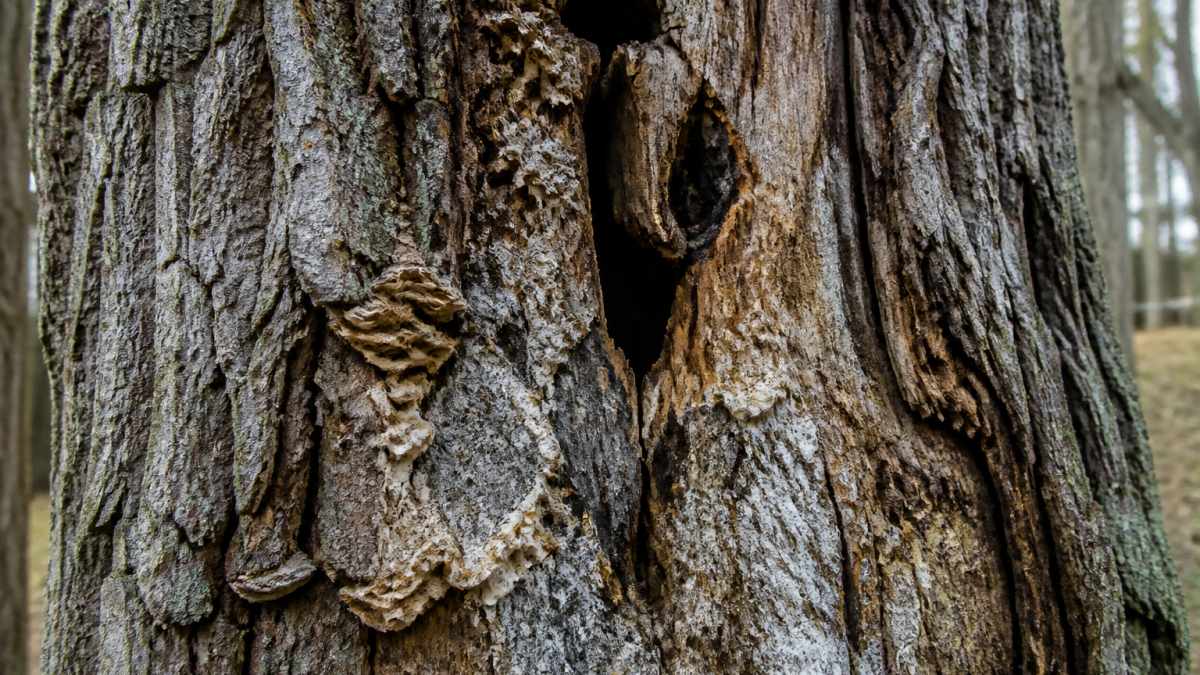
- Trunk cracks, deep splits running vertically or at angles signal structural failure risk
- Cavities, large hollow sections weaken the trunk's ability to hold weight
- Bark damage, exposed wood invites rot and decay, which spreads inward
Internal decay is invisible from outside, a tree may look fine while rotting within. Fungal growth on the bark indicates internal decay.
Root Damage and Instability
Roots anchor trees and absorb water. Damaged roots mean the tree cannot stay upright.
Common root problems include:
- Exposed roots, visible roots above ground signal the tree is losing anchorage
- Soil compaction, heavy machinery or construction near the tree damages roots
- Soil erosion, water washing soil away from the base exposes roots
If a tree leans suddenly or rocks when pushed, root damage is likely, an immediate safety concern.
When to Cut Down a Dead Tree
Remove a dead tree as soon as possible. Dead trees are unpredictable. Branches can fall without warning, especially during wind or ice storms.
Don't wait for visible danger, a dead tree that looks stable today may drop a limb tomorrow as decay accelerates.
If you're unsure whether a tree is truly dead, call a certified arborist or professional removal service.
Tree Removal After Storm Damage
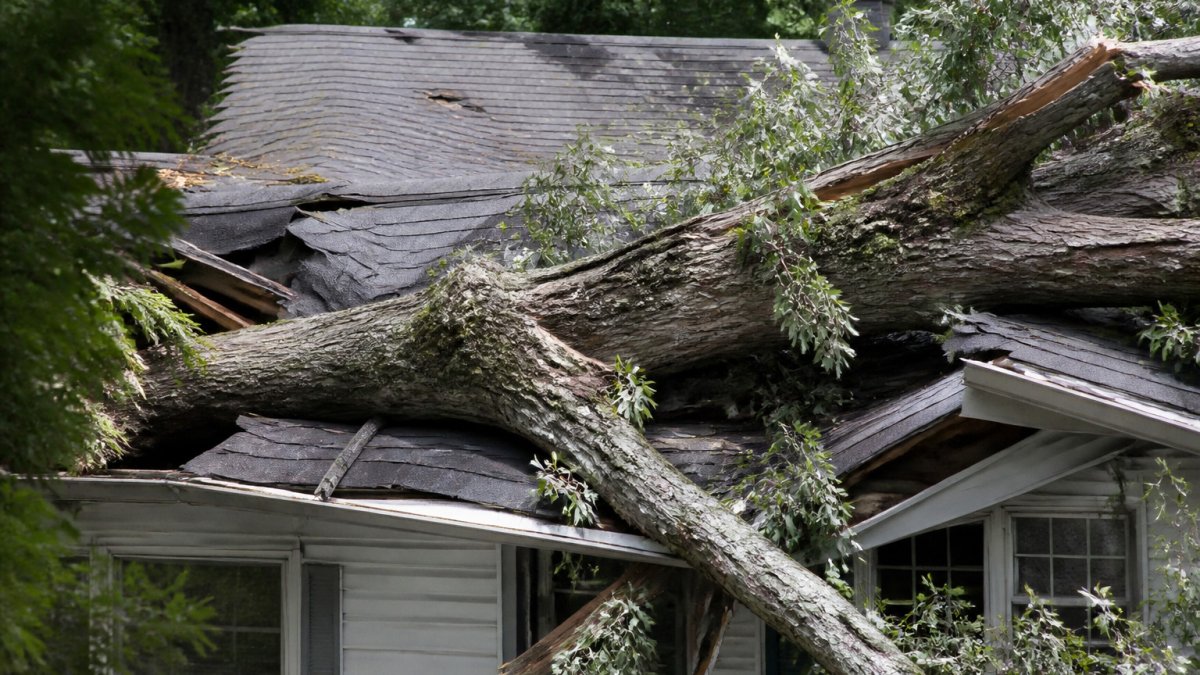
Storms cause immediate hazards: high winds break branches, uproot trees, and split trunks, while ice and snow overload branches.
After a storm, inspect your trees for:
- Broken or hanging branches (these are falling hazards)
- Leaning trees or trees pulled partially from the soil
- Stripped bark or exposed wood
Hanging branches are the most dangerous, they can fall on people, vehicles, or structures.
Some storm-damaged trees recover, a few broken branches can be pruned and will heal.
At Red Woodpecker Tree Service, we respond to storm damage with 24/7 emergency removal.
Hazardous Tree Removal Precautions
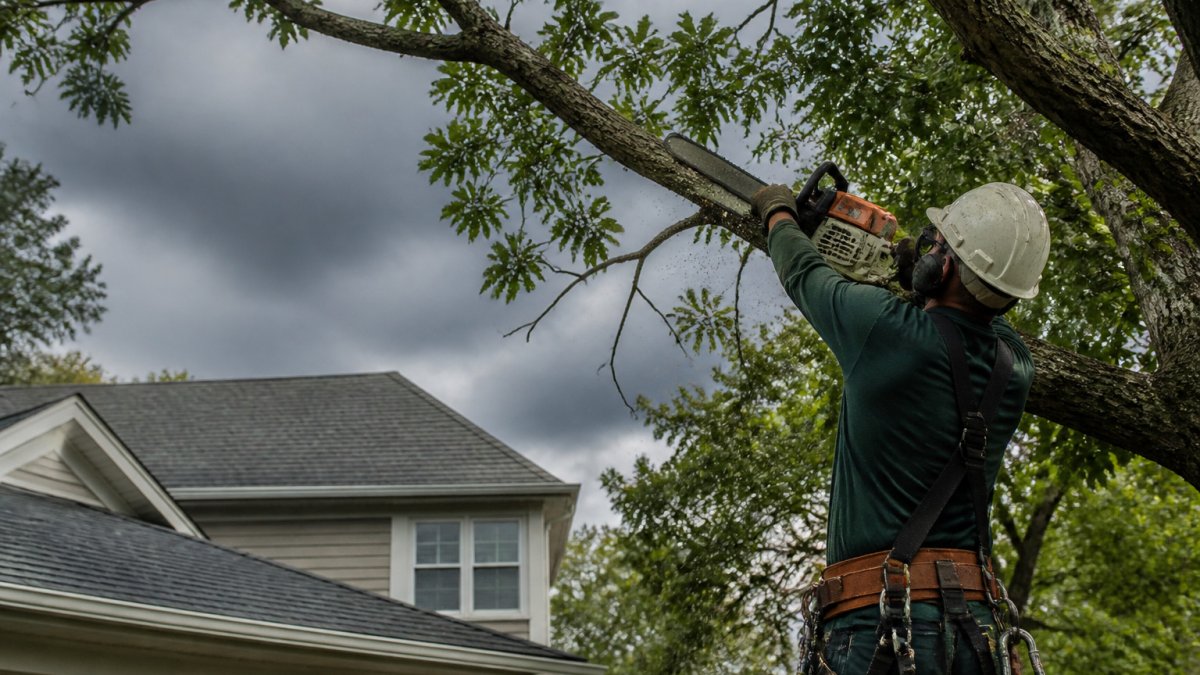
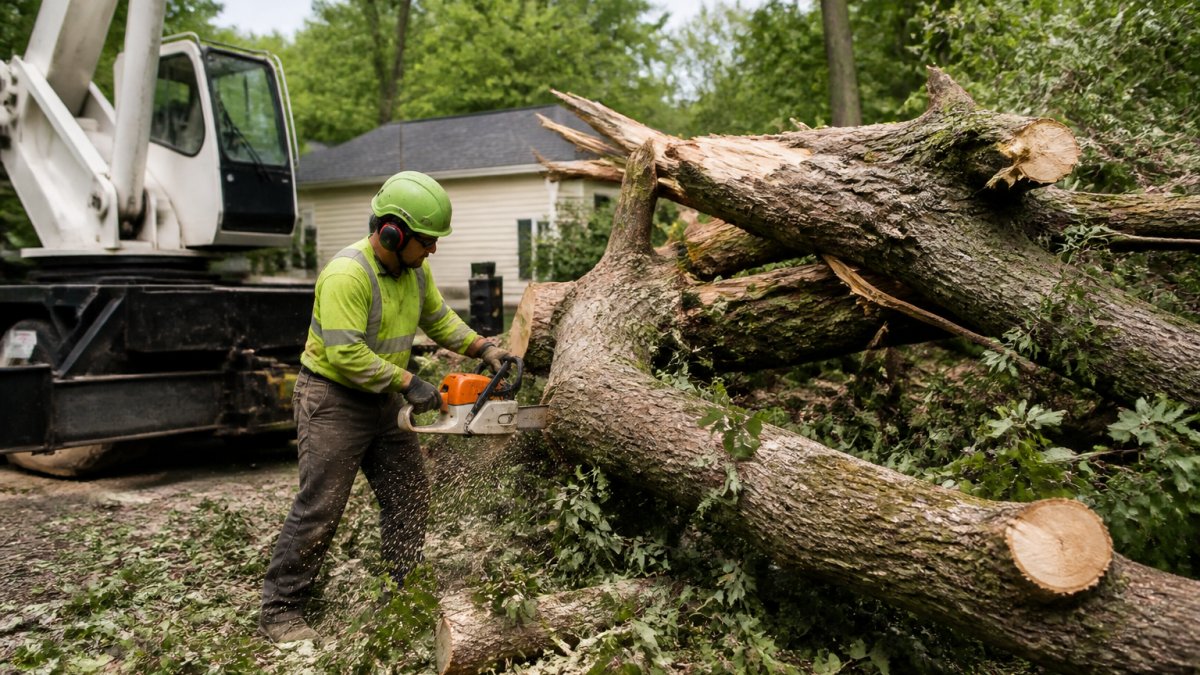
Never attempt to remove hazardous trees yourself if they're large or near structures. Improper cuts, falling branches, and equipment accidents cause serious injuries and property damage every year.
Precautions professionals take:
- Inspect the tree and surrounding area for hazards (power lines, structures, people)
- Plan the removal sequence to control where pieces fall
- Use proper equipment, chainsaws, ropes, cranes, chippers
Small dead branches or trees under 20 feet tall in open areas may be safe to remove yourself.
Hiring a professional isn't just safer, many insurance policies require licensed professionals to remove trees to maintain coverage, and a DIY mishap may lead to a denied claim.
Assessing Risk and Planning Removal
Not every hazardous tree needs immediate removal, some can be pruned, cabled, or monitored for years. Arborists use three questions: How likely is it to fail? What would it hit? How bad would the outcome be? That framework sorts a scary-looking tree from a genuinely dangerous one.
The Three-Part Risk Framework
1. Likelihood of failure. How probable is near-term failure of the tree or a major part?
2. Potential target. What is within striking distance? A target is anything a falling tree or limb could damage: a house, garage, shed, fence, driveway, car, power line, sidewalk, patio, or a spot where people stand or sit.
3. Consequences. If the tree hits the target, how bad is it? A limb on an empty shed is a repair bill; a limb on a power line, gas meter, or person can be catastrophic.
Combine the three and the decision usually sorts itself out:
- High likelihood + high-consequence target, remove promptly; treat as urgent.
- High likelihood + low-consequence target, schedule removal soon; keep people away in the meantime.
- Moderate likelihood + high-consequence target, get a professional assessment and consider pruning, cabling, or removal.
When to Prune, Monitor, or Remove
A warning sign is not automatically a removal order. Many alarming conditions are manageable:
- One dead limb in an otherwise healthy canopy, usually a pruning job, not a removal.
- A codominant stem with included bark, often can be cabled or braced by a qualified arborist rather than removed.
- Surface roots from soil erosion, may be corrected with soil grading and mulch rather than removal.
Conditions that generally point toward removal:
- A trunk that is more than roughly one-third hollow or has a crack that opens and closes with wind.
- A tree that has lifted soil on one side of the base (a "soil plate" or root plate failure sign).
- A tree with conks (shelf mushrooms) at the base, which typically indicate advanced internal decay.
Visual Inspection Checklist
Inspect your trees at least twice a year, after leaf-out and after the first hard storm of the season. You don't need expertise to spot obvious problems.
Check these items:
- Are there dead branches in the canopy?
- Is the tree leaning more than it was last year?
- Do you see large cracks in the trunk?
If you answer yes to three or more, the tree needs professional evaluation. Take dated photos from several angles to track changes.
What a Professional Assessment Involves
A qualified arborist does more than look up at the canopy. A typical assessment includes:
- A ground-level walk-around to check the root flare, trunk, and canopy from multiple sides.
- A sounding or probing check, tapping the trunk with a mallet or using a thin probe to detect hollow areas and soft wood.
- Resistance drilling or sonic tomography in higher-risk cases, which measures wood density inside the trunk without cutting into it.
Ask for the report in writing, it gives you something to compare if you get a second opinion and documents the tree's condition for any future insurance claim.
When to Call a Certified Arborist
Call an arborist if:
- You are unsure whether a tree is hazardous.
- The tree is large or near structures (house, fence, power lines).
- You want a professional assessment before removing a tree.
Look for credentials from a recognized arborist association, and confirm current liability insurance and, where required, a state or local license. An assessment costs far less than emergency removal and often saves money by avoiding unnecessary removals.
Permits, Regulations, and Responsibility
Tree removal rules are set locally and vary enormously. Before any saw touches wood, confirm three things: whether a permit is required, whether the tree is protected, and who is legally responsible if something goes wrong. Skipping this step leads to fines, stop-work orders, or surprise liability claims.
Permit and Protected-Tree Checklist
Work through this list before scheduling removal:
- Municipal tree ordinance. Many cities and counties require a permit to remove trees above a certain trunk diameter, often measured at 4.5 feet above grade (diameter at breast height, or DBH). Thresholds commonly start somewhere between 6 and 24 inches DBH, but the exact number is set locally, check your jurisdiction's ordinance.
- Protected or heritage species. Some jurisdictions specifically protect certain species (oaks are a frequent example) or designate individual "heritage," "landmark," or "significant" trees regardless of size. Removing one without approval can carry steep penalties.
- Tree preservation or replacement requirements. Some ordinances require replacement plantings, a mitigation fee, or an approved tree-preservation plan when a protected tree comes down.
To find your rules, start with your city or county planning or public works department and ask about the tree ordinance and any protected-tree registry. Many publish the ordinance and permit application online.
Who Is Responsible, and When
Responsibility for a tree generally follows the property line, but the details matter:
- Trees wholly on your property. You own the tree and the responsibility for its condition. If it falls and damages a neighbor's property, liability usually turns on whether you knew, or reasonably should have known, the tree was hazardous and failed to act. A documented arborist report showing you were monitoring the tree is useful evidence; ignoring a written hazard warning is not.
- Trees wholly on a neighbor's property. The tree belongs to the neighbor. You generally cannot remove it without their consent, but in most jurisdictions you may prune branches that overhang your property up to the property line, provided the pruning does not harm the tree's health. Killing a neighbor's tree by over-pruning can expose you to a claim for the tree's value.
- Boundary or shared trees. When a trunk straddles the property line, ownership and responsibility are typically shared, and removal usually requires both owners' agreement.
Insurance and Documentation
Homeowners insurance typically covers damage a falling tree causes to a covered structure, and many policies cover removal of a tree that has already fallen onto one.
Keep a simple file for any tree you are watching: dated photos from the same angles, arborist reports, permit copies, and receipts from pruning or removal work. That file protects you if a dispute, insurance claim, or boundary question arises.
Immediate Actions for Dangerous Trees
If a tree poses an immediate threat, take action now:
If a tree is actively falling or a large branch is hanging:
- Keep people and pets away
- Call emergency services if it's near power lines or structures
- Contact a 24/7 emergency tree removal service
If a tree is leaning severely or has major damage:
- Keep the area clear until a professional assesses it
- Avoid parking under or near the tree
- Keep children away
If you see signs of hazard but no immediate danger:
- Take photos of damage or warning signs
- Call a certified arborist for an assessment
- Get quotes from multiple tree services
Red Woodpecker Tree Service offers emergency response for dangerous trees. Our team assesses the risk, explains your options, and removes trees safely when needed.
Deciding whether to remove a hazardous tree is a safety decision, not just maintenance. Dead, storm-damaged, and structurally damaged trees pose real risks to people and property.
At Red Woodpecker Tree Service, we help homeowners make the right call.
Frequently Asked Questions
What are the signs that a tree is hazardous?
Hazardous trees show visible warning signs including dead branches, trunk cracks or cavities, decay and fungal growth, sudden leaning, exposed or damaged roots, and broken or hanging limbs. A tree may also be hazardous if it's dying or diseased, has lost significant canopy, or is positioned where it could strike a home, fence, or people if it falls. A visual inspection can reveal most obvious problems, but a certified arborist can assess structural weakness that isn't immediately visible.
When should a dead tree be cut down?
A dead tree should be removed as soon as possible, especially if it's near structures or people. Dead trees lose structural integrity and can fail without warning. The wood becomes brittle, branches snap easily, and the entire tree may fall unpredictably. If the tree is in a target area, near your home, a neighbor's property, a fence, or a street, prioritize removal. If it's isolated in a back corner of your property away from any structures, you have more time, but don't delay indefinitely.
Should a leaning tree be removed?
A leaning tree doesn't always need removal, but a sudden change in lean is a red flag. A tree that has always leaned slightly may be stable. However, if a tree has recently started leaning, tilted after a storm, or leans significantly with visible root damage, removal is often necessary. Root instability causes most dangerous leans. A certified arborist can assess whether the lean indicates a structural problem or if the tree can be monitored safely.
What should I do if I think a tree is hazardous but I'm not sure?
Request a professional tree inspection from a certified arborist. They perform a detailed visual assessment, check for decay and structural weakness, evaluate the tree's position relative to structures and people, and recommend whether the tree should be monitored, pruned, or removed. Many arborists offer free estimates. It's better to have a professional confirm the tree is safe than to ignore warning signs that could lead to property damage or injury.