 comparison
Commercial Tree Maintenance Service: A 2026 Guide
Table of Contents
- What Commercial Tree Maintenance Includes
- Commercial Tree Trimming: Routine Care and Risk Reduction
- Choosing a Commercial Arborist for Your Property
- Commercial Tree Maintenance Plans: Frequency and Structure
- Emergency Tree Service for Businesses: Storm Damage and Hazard Response
- Tree Assessment and Health Monitoring
- Pricing, Contracts, and What to Expect
- Frequently Asked Questions
Last Updated: October 18, 2026
What Commercial Tree Maintenance Includes
Commercial tree maintenance is a comprehensive approach to keeping trees healthy, safe, and visually appealing on business properties. Unlike residential care, commercial tree maintenance service Nashville addresses the specific demands of office parks, retail centers, industrial facilities, and multi-tenant properties where liability, aesthetics, and property value intersect.
Neglected trees can become expensive problems. A single failing limb near a building entrance creates legal exposure. Dead branches above parking areas invite lawsuits. Overgrown canopies block signage or damage rooflines. The cost of reactive removal far exceeds preventive care.
Comprehensive commercial tree maintenance covers several core areas. Routine pruning removes dead wood, improves structure, and reduces hazards before they become emergencies. Health assessments catch disease and pest pressure early. Cabling and bracing stabilize weak limbs on valuable trees. Crown thinning increases light penetration and reduces wind resistance. Debris removal keeps grounds clean and professional. Each service works together to extend tree life while minimizing risk.
The goal isn't just keeping trees alive, it's managing them strategically. A well-maintained tree can add to property value. It reduces cooling costs, improves air quality, and creates the landscape appearance that attracts tenants and customers. Neglected trees do the opposite.
Commercial Tree Trimming: Routine Care and Risk Reduction
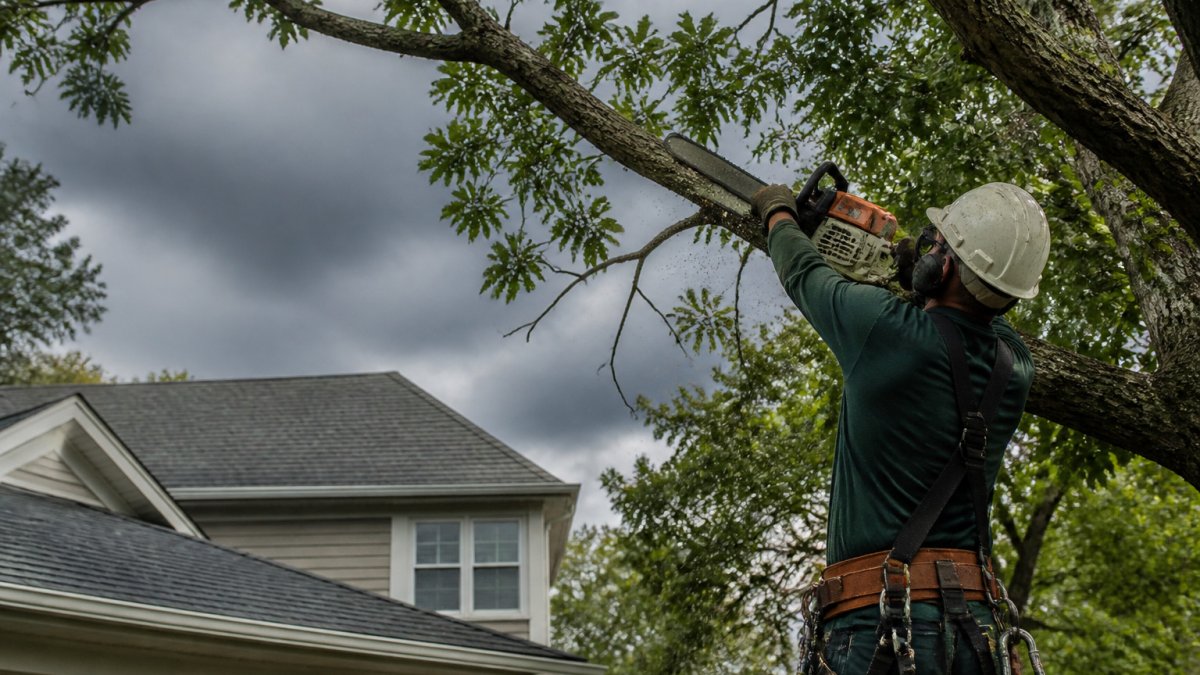
Commercial tree trimming is the most frequent maintenance task, and it's where prevention pays the biggest dividend. Regular trimming removes dead branches before they fall, improves tree structure, and reduces the likelihood of storm damage that triggers emergency calls.
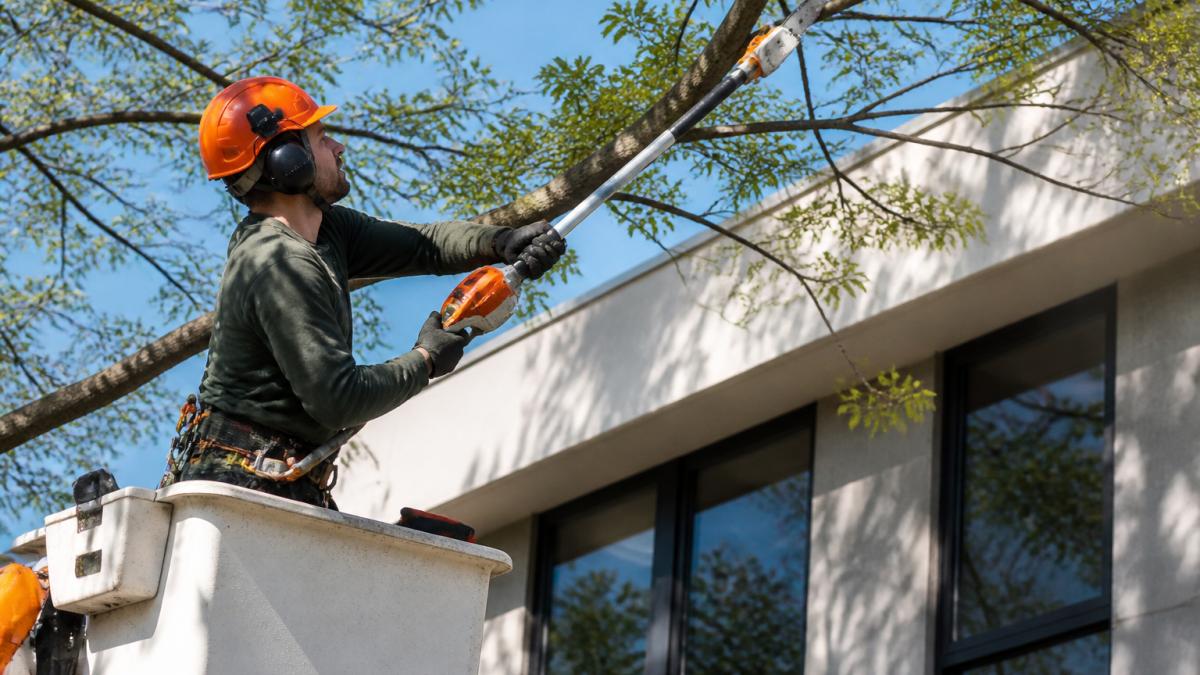
The frequency of trimming depends on tree species, age, and location. Young trees benefit from structural pruning every 2-3 years to develop strong branch angles and central leaders. Mature trees typically need trimming every 3-5 years to maintain shape and remove hazardous growth. Trees near buildings, power lines, or parking areas may need annual attention.
What most property managers get wrong is confusing trimming with topping. Topping, cutting branches back to stubs, weakens trees, creates disease entry points, and triggers aggressive regrowth. Proper trimming follows ANSI standards, making cuts just outside the branch collar to allow natural healing. It's a skill that separates professional arborists from crews with chainsaws.
Storm season amplifies the importance of preventive trimming. Trees with weak branch angles, included bark, or codominant stems are far more likely to fail during high winds. Removing these structural defects before the storm arrives eliminates the emergency entirely.
Red Woodpecker Tree Service approaches commercial tree trimming with liability in mind. We remove branches that threaten structures or utilities. We prune for clearance, roofs, signs, parking areas, and pedestrian zones. The result is a property that looks professional and carries minimal risk.
Choosing a Commercial Arborist for Your Property
Selecting the right arborist is where many property managers stumble. The cheapest bid often comes from crews without credentials or insurance. The result is liability exposure, poor work quality, and trees that fail within years instead of decades.
Credentials and Insurance Requirements
A legitimate commercial arborist holds credentials that verify knowledge and commitment to standards. The International Society of Arboriculture (ISA) Certified Arborist credential requires passing an exam covering tree biology, pruning standards, pest management, and safety. It's not a license you get for showing up, it's earned through study and demonstrated competence.
Ask your arborist for their ISA card. Ask if they maintain continuing education. These aren't formalities, they're signals that someone takes their craft seriously.
Insurance is non-negotiable for commercial work. General liability insurance covers property damage. Workers' compensation insurance protects your business if a crew member is injured on your property. Ask for certificates of insurance naming your business as additionally insured. A contractor who hesitates or claims they can't provide this is a red flag.
Red Woodpecker Tree Service carries full liability coverage and workers' compensation. Our arborists hold ISA certification. We provide proof of insurance before any work begins, giving you documented protection.
Service Area and Response Time
A commercial arborist's service area matters more than price. A contractor 45 minutes away from your property will charge travel time on routine visits and may not arrive quickly for emergencies. Local contractors can respond to storm damage within hours, not days.
Response time is critical for emergency situations. A tree leaning against your building or blocking an entrance can't wait for the next available opening. Red Woodpecker Tree Service operates 24/7 emergency response in the Nashville area.
Commercial Tree Maintenance Plans: Frequency and Structure
A formal maintenance plan removes guesswork and spreads costs predictably. Instead of reacting to visible problems, you're managing trees proactively based on species, age, and condition.
A typical commercial tree maintenance plan includes scheduled visits, usually annual or biannual, where an arborist assesses tree health, removes dead wood, addresses structural issues, and documents everything. The plan specifies which trees get attention, what work is needed, and when it happens.
The structure varies by property. A property with 20 mature trees might need quarterly visits during growing season and annual deep assessments. A newer development with young trees might need annual structural pruning for the first 5-7 years, then shift to maintenance mode. A property with hazard trees near buildings requires more frequent monitoring.
Cost predictability is the real benefit. The math is obvious, but many property managers don't see it until the emergency happens.
Red Woodpecker Tree Service structures maintenance plans around your specific property. We assess every tree, identify risk factors, and recommend a schedule that fits your budget and liability profile. Then we document everything, so you have a record for insurance and future reference.
Emergency Tree Service for Businesses: Storm Damage and Hazard Response
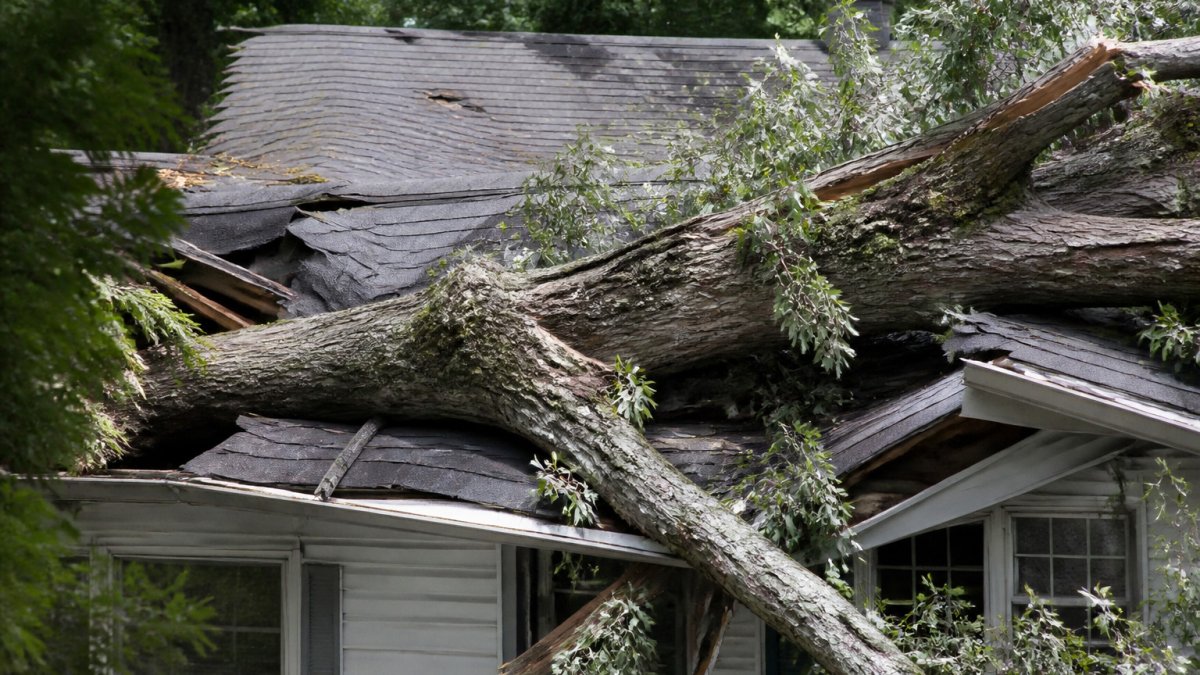
Storm damage creates immediate liability. A tree blocking a parking lot entrance is a business interruption. A branch through a building is property damage. A fallen tree trapping vehicles is a lawsuit waiting to happen. Emergency tree service isn't a luxury, it's risk management.
The challenge with emergency response is availability. A contractor who handles routine maintenance may not prioritize emergency calls. A contractor who specializes in emergency work might not know your property or have relationships with your insurance company. The best approach is partnering with someone who does both.
Red Woodpecker Tree Service maintains 24/7 emergency availability specifically because commercial properties can't afford downtime. A storm hits at 2 a.m. on a Sunday. We respond. We clear the hazard, document the damage, and restore access. We don't wait for business hours or availability windows.
The key to emergency response is having equipment staged and crews trained for rapid deployment. We maintain modern equipment so we can handle complex situations safely and efficiently. We don't show up with a chainsaw and hope for the best.
Tree Assessment and Health Monitoring
A tree assessment is the foundation of smart maintenance. Without it, you're guessing which trees need work and which ones are fine. An assessment identifies disease, pest pressure, structural defects, and environmental stress before they become emergencies.
A professional assessment includes visual inspection, probing for decay, checking for pest damage, and evaluating structural integrity. The arborist documents findings and recommends a course of action, from monitoring to pruning to removal.
Health monitoring tracks trees over time. A tree that's stable this year might show signs of decline next year. Consistent monitoring catches these changes early, when intervention is possible. A tree that's been declining for three years with no intervention is often beyond saving.
Red Woodpecker Tree Service includes tree assessment in every commercial maintenance plan. We document their condition, and track changes year to year. This record protects you, it shows you've been managing trees responsibly and monitoring for hazards.
Pricing, Contracts, and What to Expect
Pricing for commercial tree maintenance service Nashville varies based on property size, tree count, species mix, and maintenance intensity. A property with 15 healthy mature trees needs less work than one with 50 trees in mixed condition. A property with hazard trees near buildings requires more frequent assessment than one with trees in open areas.
The best approach is requesting a free assessment and estimate from qualified contractors. An arborist should visit your property, evaluate every tree, and provide a detailed proposal. This proposal should specify which trees get which services, the frequency of visits, and the cost structure, whether it's a fixed annual fee, hourly rates, or per-service pricing.
Red Woodpecker Tree Service provides free estimates for all commercial properties. We assess your trees, understand your concerns, and propose a maintenance plan that fits your budget and risk profile. We're transparent about costs, no surprises, no hidden fees. You know what you're paying and what you're getting.
Contracts should clearly define scope, schedule, and responsibility. Who's responsible if a branch falls between scheduled visits? What happens if a tree dies despite maintenance? What's the cancellation policy? A good contract protects both parties and prevents misunderstandings.
Managing trees on commercial property is an ongoing responsibility that pays dividends when done right. A well-maintained landscape protects your business from liability, preserves property value, and creates the professional appearance that attracts tenants and customers. The challenge is finding an arborist who understands commercial needs, responds quickly to emergencies, and stands behind their work.
Red Woodpecker Tree Service specializes in commercial tree maintenance across the Nashville area. Our certified arborists deliver routine maintenance, emergency response, and professional assessment. We carry full liability insurance, maintain modern equipment, and provide 24/7 emergency availability. Get a free estimate from Red Woodpecker Tree Service and see how professional tree care transforms your property.
Frequently Asked Questions
What does commercial tree maintenance include?
Commercial tree maintenance includes routine pruning and trimming to remove dead or hazardous branches, tree health assessments to identify disease or pest damage, cabling and bracing for structural support, and debris removal and cleanup. Many providers also offer emergency storm response. A comprehensive maintenance plan typically covers multiple site visits per year, with frequency depending on tree species, age, and property risk factors.
How often should commercial properties have their trees inspected?
Most commercial properties benefit from professional tree inspections. After severe weather events, immediate assessment is critical to identify hazardous limbs or damaged trees. A certified commercial arborist can recommend the right inspection frequency based on your property's specific tree inventory and risk profile.
What credentials should a commercial arborist have?
A qualified commercial arborist should hold current certification from the International Society of Arboriculture (ISA) or similar recognized body. Verify that the company is licensed, fully insured with general liability and workers' compensation coverage, and bonded. Ask for proof of certification and insurance before signing a contract. Licensed professionals understand site safety requirements, property liability, and proper tree care standards, critical for protecting your business and its liability exposure.
Does commercial tree maintenance include emergency storm response?
Many commercial tree service providers offer 24/7 emergency storm response to address fallen trees, broken limbs, and hazardous limbs threatening structures or utility lines. Response time varies by provider and distance from their service area. When selecting a maintenance provider, confirm their emergency availability, typical response time, and whether emergency work is included in your maintenance contract or billed separately. Having a pre-established relationship with a provider ensures faster response when storms strike.